
You’ve got a big pile of brush sitting in your backyard. You’re proud of yourself for getting your defensible space work completed but now you are staring at a giant pile of fuel wondering what you are going to do with it. Whether you’re clearing defensible space around a house, opening up an overgrown back lot, or getting a site ready for an ADU or new home, the job leaves you with piles of branches, logs, stumps and roots. Something has to happen to all of it.
Land clearing debris removal comes down to three options: chip it, haul it, or burn it. Which one makes sense depends on what you cleared, how much of it there is, and where your property sits. The rules in San Mateo and Santa Clara Counties are very different from the rules in Mono County, so we’ll cover both.
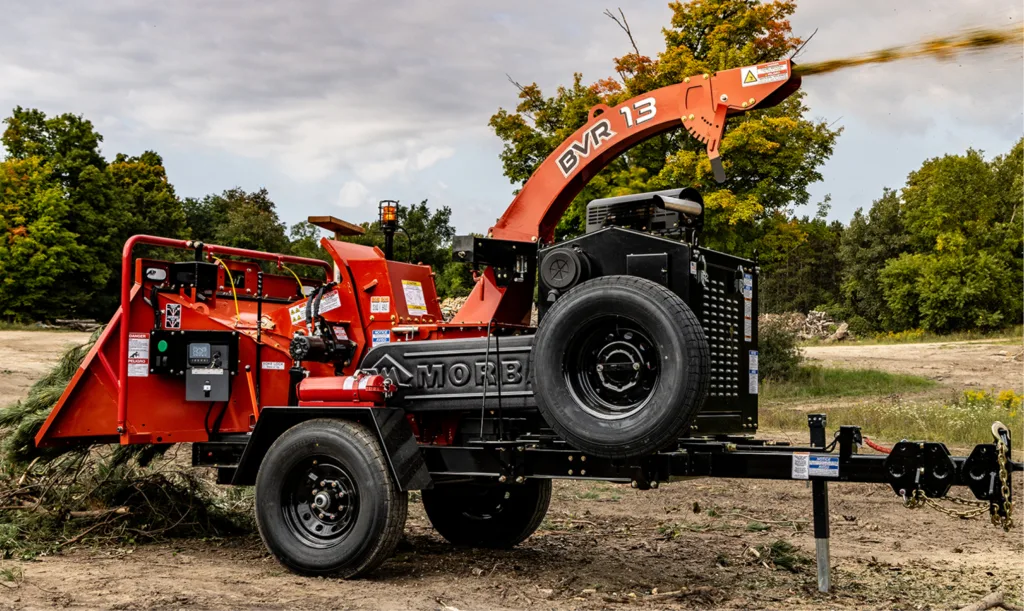
Option 1: Chip It
Chipping is usually the cleanest answer for branches and brush. A chipper turns a pile the size of a pickup into a fraction of the volume, and the chips can stay on site as mulch on paths and bare slopes or be blown into a truck and taken away.
If you live in a fire-prone neighborhood, a free community chipping program may cover small amounts of material. We cover how those programs work and where to find them in Defensible Space 101. They’re a great resource for routine yard maintenance, but they’re built for small piles, not land clearing.
What free chipping programs won’t take
The FIRE SAFE San Mateo County neighborhood chipper program is a good example of the limits. According to the program’s guidelines:
- Piles can be no more than 10 feet wide, 10 feet long and 5 feet tall
- Material has to be under 8 inches in diameter
- No roots, stumps, rocks or mud
- No poison oak, blackberry, vines, or broom that has gone to seed
- No material from timber harvest, tree farms, new construction, or vacant lots
That last line matters. If you’re clearing a lot to build, the free program isn’t an option, and you’ll need to chip it yourself with a rental machine or have a contractor bring a chipper and a crew.
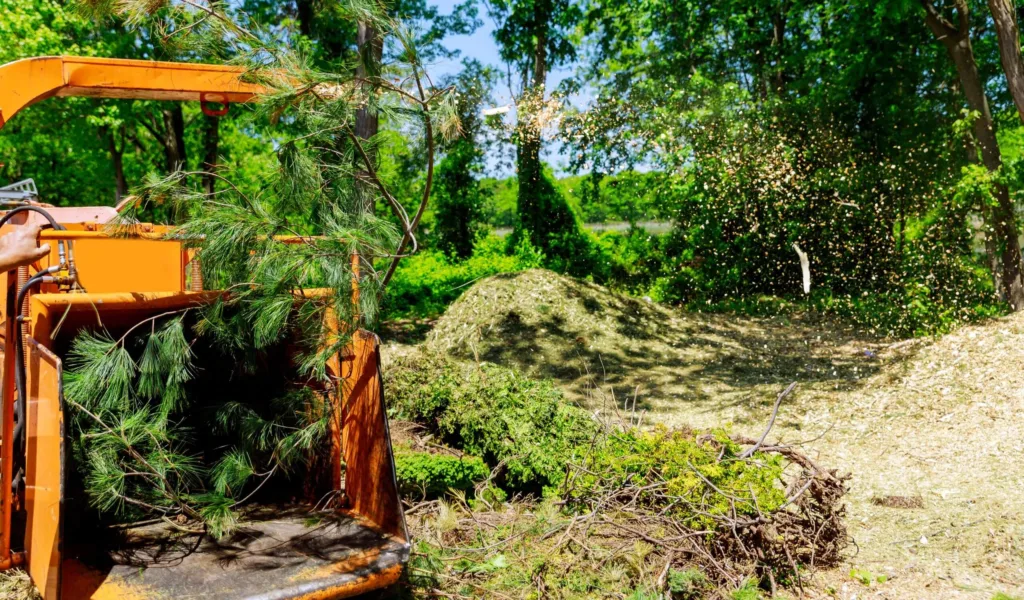
Option 2: Haul It Off
Some debris can’t go through a chipper. Stumps, root balls, large logs, and brush tangled up with soil and rock all need to be loaded and trucked away. Hauling is also the practical choice when you need the site clean and ready to work on quickly, such as before grading or pouring a pad.
On a typical clearing job, a loader or excavator with a grapple bucket stacks material into dump trucks, and clean green waste goes to a facility that accepts it. Keeping vegetation separate from soil, rock and trash makes disposal easier, because mixed loads are harder to place.
A tip for Mono County property owners
Mono County runs a Wood Waste Waiver Program for clean wood waste removed from the 30-foot defensible space zone around a home. Fire chiefs hand out the waiver coupons based on each property’s defensible space needs, so contact your local fire protection district before you haul.
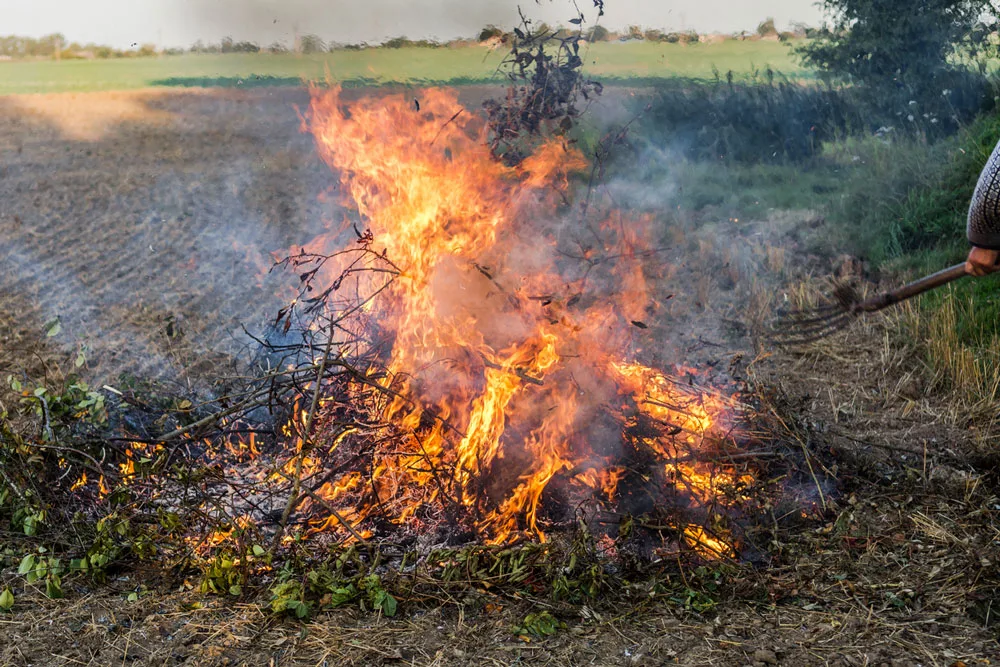
Option 3: Burn It (Where It’s Allowed)
Burning is the option people ask about most, and it’s the one with the most rules. It’s also where the Bay Area and the Eastern Sierra split completely.
San Mateo and Santa Clara Counties
Both counties fall under the Bay Area Air District, and its open burning rules ban open burning everywhere in the district except for 17 specific burn types. Those types cover things like agricultural burning, range and forest management, fire training and approved wildland vegetation management. Residential backyard burning isn’t on the list.
Even the burn types that are allowed have to happen on designated burn days, usually require notifying the Air District and paying a fee, and may need a permit from the local fire agency. For a homeowner clearing a yard or a lot, the realistic options in the Bay Area are chipping and hauling.
Mono County and the Eastern Sierra
In Mono County, residential burning is regulated by the Great Basin Unified Air Pollution Control District, and pile burning of dry natural vegetation is allowed in every community with a valid permit on a permissive burn day. The district’s restrictions split communities into two groups:
- Restricted areas, including Mammoth Lakes, June Lake, Crowley Lake, Chalfant, Walker and Coleville: pile burning only, and burn barrels are prohibited
- Allowable areas, including Bridgeport, Lee Vining, Benton and Twin Lakes: pile burning, plus burn barrels for dry vegetation, cardboard and non-glossy paper
- Everywhere: household trash can never be burned, and permits come from your local fire agency
Where CAL FIRE has jurisdiction, its residential burn permit limits piles to 4 feet by 4 feet and covers vegetation from one- and two-family homes. Burn permits are commonly suspended during fire season, so check the burn status before you light anything. Small piles from yard cleanup can work. A full lot’s worth of brush, stumps and logs is a lot of 4-by-4 piles, and chipping or hauling is usually faster.
Don’t Forget the Stumps and Roots
Once the brush is gone, what’s left in the ground is often the bigger job. Stumps and roots won’t go through most chippers, aren’t accepted by free chipping programs, and can’t be left in place under a building pad, driveway or patio. As they rot, they leave voids that settle.
If the land clearing is the first step of a building project, stump and root removal belongs in the same plan as grading and compaction. That’s why we treat clearing as part of residential site preparation, not a separate cleanup job. The goal is bare, stable ground that’s ready for the next trade.
Which Option Fits Your Property?
Most land clearing jobs end up using more than one option. Here’s a quick way to sort it out:
- Small piles of branches from routine defensible space work: a free chipping program, if your neighborhood has one
- Lots of brush and branches, or any clearing for new construction: contractor chipping, with chips left on site or hauled
- Stumps, roots, big logs and dirty debris: excavate, load and haul
- Dry vegetation on an Eastern Sierra property: pile burning can be an option with a permit, on a permissive burn day
If the pile is bigger than a weekend, or the clearing is the start of a build, it’s time to bring in a contractor. Harris Excavation clears land across the Bay Area and the Eastern Sierra, and holds a California Licensed Timber Operator license along with our general engineering license. We’ll look at what you have and lay out the most practical way to get it off the property.
Land Clearing Debris Removal FAQ
Can I burn yard waste in my backyard in San Mateo or Santa Clara County?
No. The Bay Area Air District bans open burning except for 17 specific burn types, and residential backyard burning isn’t one of them. Chipping and hauling are the options for homeowners.
Do I need a permit to burn brush in Mammoth Lakes?
Yes. Mammoth Lakes is a restricted area under the Great Basin Unified Air Pollution Control District. Pile burning of dry natural vegetation is allowed only with a valid permit from your local fire agency on a permissive burn day, and burn barrels aren’t allowed.
Will a free chipping program take debris from clearing a building lot?
Usually not. Programs like the San Mateo County neighborhood chipper exclude material from new construction and vacant lots, along with stumps, roots and anything over 8 inches in diameter.
Can wood chips stay on my property?
Often, yes. Chips can be spread on paths and bare soil to help with erosion and weeds. Near the house, check your local fire district’s defensible space guidance before spreading mulch.
Get the Cleared Ground You Need
Brush, logs, stumps and roots each need a different plan, and the rules change once you cross the Sierra. Harris Excavation handles land clearing and debris removal from start to finish, so you’re left with clean ground instead of a pile you have to figure out.
Tell us about your property and what you’ve cleared, or what still needs to come down, and we’ll put together a free quote.
