
Mammoth just received their first snowfall of the season! In Mammoth Lakes, the building season has a hard stop. Once the snow starts to stick, open footings, loose trenches and bare dirt become problems you’ll be living with until spring. If you’re planning Mammoth Lakes excavation before winter, the goal for fall is simple: finish what you can, and leave everything else stable, covered and out of the way of the plows.
This guide walks through the Town rules that make fall timing matter, the earthwork worth wrapping up before the snow, how to winterize a site you can’t finish, and how to use the winter to get ready for a fast start next season.
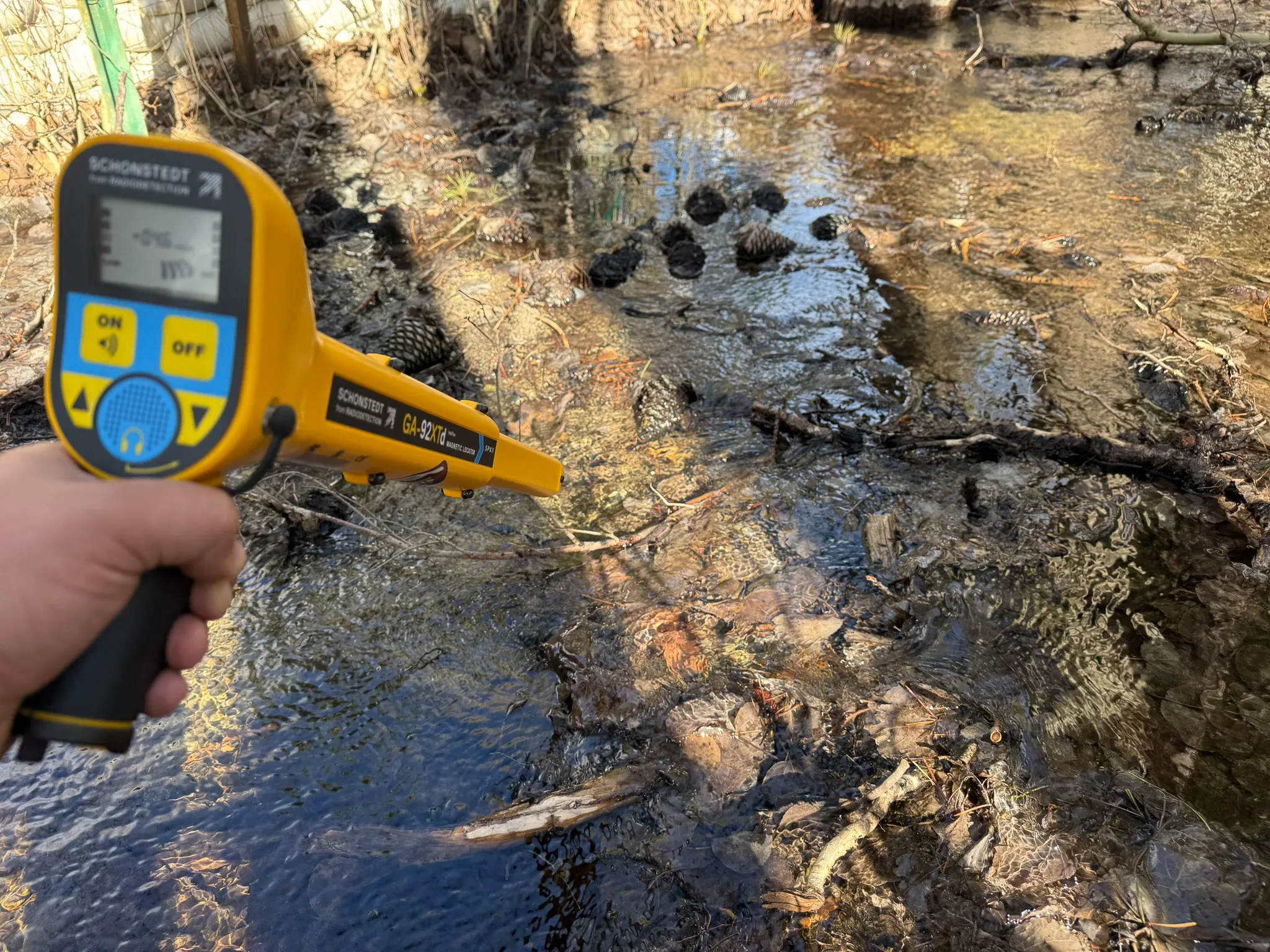
Why Fall Timing Matters in Mammoth Lakes
Several Town of Mammoth Lakes rules tighten up in the fall, and the weather tightens up right along with them. Here’s what shapes the calendar:
- Street and right-of-way trenching: The Town’s encroachment permit conditions say any trench work scheduled after October 1 requires written approval from the Town Engineer.
- Paving: Paving in the right-of-way completed after October 15 is considered temporary unless Public Works Engineering approves otherwise, and asphalt can’t be placed on a frozen surface.
- Frost depth: The Town’s Minimum Design Standards treat the frost line as at least 24 inches below grade, and footings and foundations must extend below it.
Outside Town limits, the rules can be stricter. Mono County’s standard grading specifications for land development projects in the unincorporated county say construction must stop by October 15, with the project prepared for winter and all exposed soil stabilized. Check which agency covers your parcel before you assume you have more time. Our Eastern Sierra service page lists the communities we work in.
Earthwork to Finish Before the Snow
If your project is already underway, these are the pieces of dirt work most worth closing out before winter.
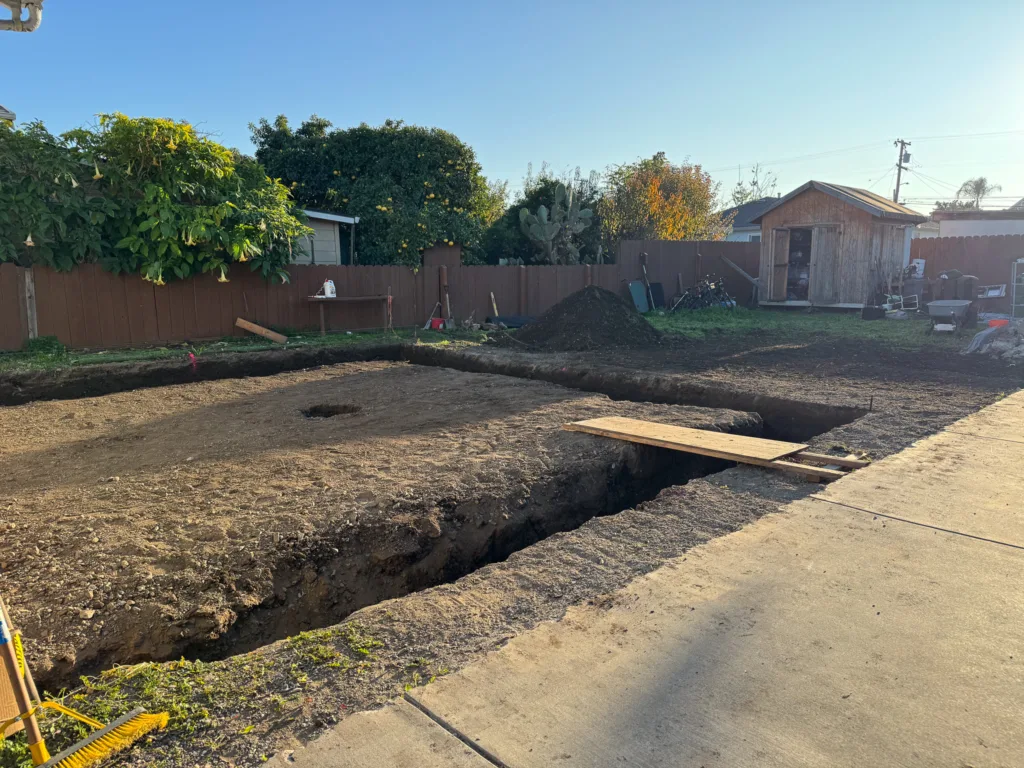
Footings and Foundation Excavation
An open footing excavation that fills with snow and meltwater can soften the bearing soil your engineer designed around. If the foundation can’t be poured before freezing weather, talk with your engineer and concrete contractor about holding the final dig until spring, or how to protect the subgrade until the pour. In Town, footings need to reach at least 24 inches below grade, and deeper if your plans call for it.
Utility Trenches and Service Lines
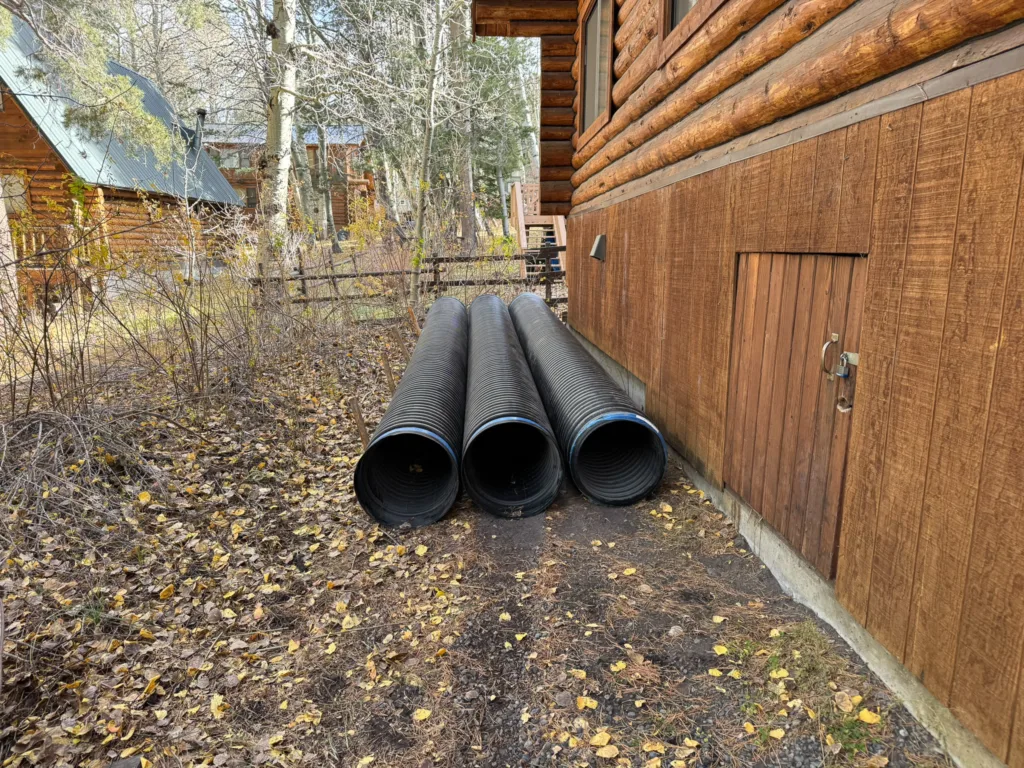
Water, sewer and electrical service trenches should be bedded, inspected and backfilled before the snow. A trench left open over winter collects water, sloughs in, and becomes a hazard under the snow where nobody can see it. If your connection crosses a Town street, plan it for summer, since trench work there after October 1 needs the Town Engineer’s sign-off.
Late-season work can still get done when it’s planned right. Down US-395 in Bishop, we were brought on in mid-November to trench underslab sewer lines for a new hotel and had them bedded and ready for pipe before winter arrived. Read the Bishop project write-up.
Rough Grading and Snowmelt Drainage
Spring melt is when a Mammoth Lakes lot shows you where the water wants to go. Finish rough grading so the ground slopes away from the foundation, and get swales, drain lines and any dry well in before the ground freezes. The Town requires a dry well when a project’s impervious surface exceeds 4,000 square feet. Our residential drainage work covers French drains, downspout lines and dry wells.
Driveway Subgrade and Snow Storage
Where the snow goes matters as much as where the car goes. The Town asks residential projects to set aside snow storage equal to 75% of the required parking and driveway area, and snow from your driveway can’t be pushed into the street right-of-way. Grading the driveway and storage area this fall means you’ll know where the piles go, and where their meltwater drains, when the first big storm hits.
Can’t Finish? How to Winterize an Open Site
Sometimes the season runs out first. When that happens, the job is to leave the site stable so it doesn’t erode, slump or turn into a hazard under the snow.
- Stabilize bare soil. Cover or mulch exposed slopes and stockpiles, and keep silt fence, fiber rolls and other erosion controls working through the spring melt.
- Backfill or secure every hole. Anything left open should be fenced, covered and marked so it can be found under the snow.
- Protect the subgrade. Keep water out of footing excavations, and don’t place concrete or asphalt on frozen ground.
- Clear the right-of-way. Move equipment, materials and spoils off Town roads and shoulders so the plows can do their work.
- Mark what matters. Flag utility stub-outs, cleanouts, survey points and drain inlets with tall stakes so they don’t get buried or hit.
- Give runoff a safe path. Make sure water leaving the site has a stable outlet and won’t cut across bare dirt or onto a neighbor’s lot.
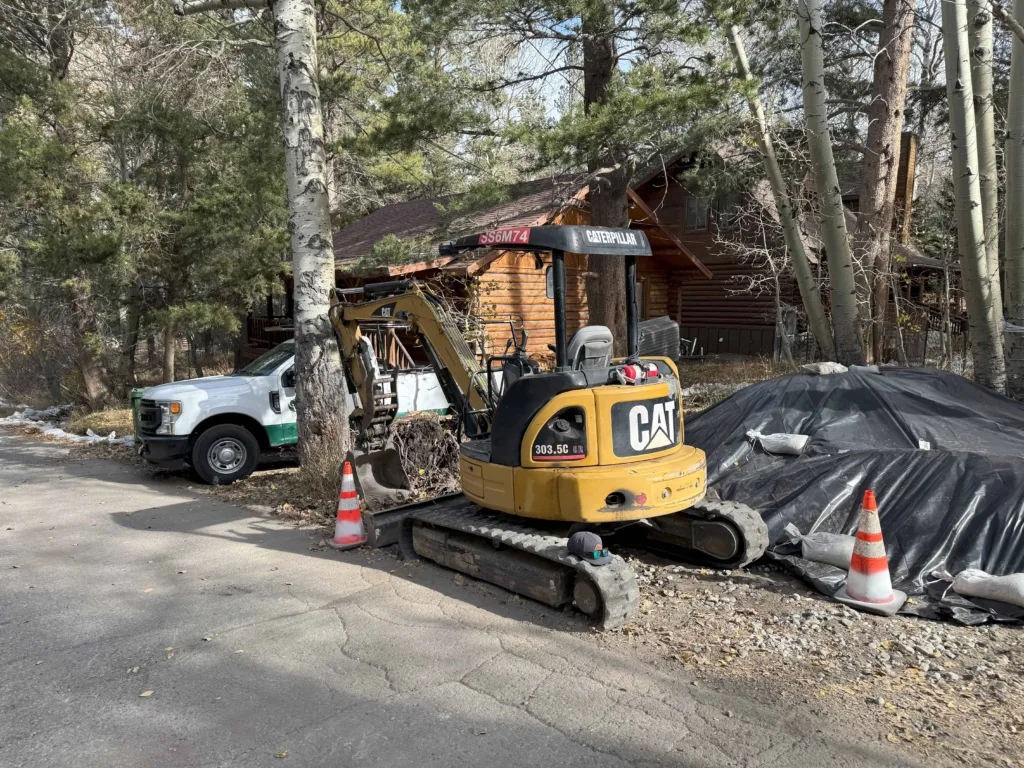
Plan Now for an Early Start Next Season
If your project hasn’t broken ground yet, winter is the best time to get ready. The projects that start the moment the ground opens up are the ones with their paperwork already done.
- Get a site survey and, if your project needs one, a soils report from a licensed engineer or geologist.
- Start the grading and building permit process with the Town or Mono County, whichever covers your parcel.
- If trees need to come out, ask whether a CAL FIRE Timber Harvest Plan or exemption applies. We’re a California Licensed Timber Operator (#B014361) and can handle tree removal along with the excavation.
- Schedule any street or utility connection work for summer, well ahead of the October 1 trench cutoff.
- Get bids early so your excavation contractor can hold a spot on the schedule.
Our Mammoth Lakes excavation page covers the local rules in more detail, including snow storage, frost depth and street-work timing. If you’d like a contractor to look at your lot, whether you’re closing out a site this fall or planning for next season, we’ll walk it, review your plans and send a clear written estimate.
Frequently Asked Questions
How late in the fall can you dig in Mammoth Lakes?
It depends on the work and the weather. On private property, excavation can often continue until conditions shut it down. Trench work in a Town street after October 1 needs written approval from the Town Engineer, and right-of-way paving after October 15 is treated as temporary.
Can footings be poured after the ground freezes?
Concrete shouldn’t go on frozen subgrade. If freezing weather arrives before the pour, your engineer and concrete contractor will decide whether to protect the excavation or wait for spring.
Does a site shut down for winter still need erosion control?
Yes. Exposed soil still moves with snowmelt. The Town requires inspected erosion and sediment control before earthwork starts, and those controls need to keep working until the site is stabilized. In unincorporated Mono County, the county’s grading specifications call for all exposed soil to be stabilized when work stops by October 15.
When should I book excavation for next summer?
Over the winter. Having your survey, soils report, permits and bids in order before spring lets you break ground as soon as the site opens up.
Get Your Eastern Sierra Site Ready for Winter
Harris Excavation is a licensed General Engineering Contractor (CSLB #1117960) and a California Licensed Timber Operator (#B014361). We handle excavation, grading, trenching, drainage and site prep in Mammoth Lakes, June Lake, Bishop, Bridgeport and across Mono County.
Whether you need to close out a site before the snow or line up next season’s dig, send us a quote request with your address and any plans you have. We’ll get back to you with a clear written estimate.
