
Adding an EV charger, switching to a heat pump, or building an ADU can all push your home past what its existing electrical service can handle. When that happens, PG&E may need to run a bigger service line to your house to serve a larger panel. If your service comes in underground, or you’re converting from overhead to underground, someone has to dig a trench across your property first.
That trench is the part of a PG&E service upgrade that surprises most homeowners. PG&E designs the job and pulls the new cable, but the digging, the conduit, and the backfill from PG&E’s box to your panel are generally on you. This guide walks through who does what, the order things happen in, and how to keep the trench from becoming the thing that holds up your whole project.
Why a Service Upgrade Often Means a Trench
Your electrical service is the line that runs from PG&E’s system to your meter. Older homes on the Peninsula and in the South Bay often have smaller services sized for a time before EVs, induction ranges, and heat pumps. When your electrician applies for more capacity, PG&E reviews the load and decides whether its own equipment, and the line to your house, need to change.
For an underground service, a bigger line usually means new conduit in a new or reworked trench. Under PG&E’s service extension rules (Electric Rule 16), the trench and conduit on private property are generally the customer’s responsibility. PG&E’s own workflow for a panel upgrade with an upgraded service line lists the trenching and conduit as a customer step, followed by a PG&E inspection before anything gets buried.
Who Does What on a PG&E Service Upgrade
Several parties touch the job, and delays usually happen in the handoffs. Here’s how the work typically splits:
- You or your electrician: submit the application through PG&E’s Your Projects portal, review the design, sign the contract, and handle the panel and the city electrical permit.
- PG&E: checks whether nearby infrastructure can carry the new load, designs the service, inspects the trench and conduit, and installs the new cable and meter.
- Your trenching contractor: calls in the utility locate, digs to PG&E’s design, prepares for conduit, keeps the trench ready for inspection, then backfills and compacts.
- Your city or county: inspects the panel and electrical work and releases the meter so PG&E can schedule its crew.
PG&E notes that it gets permits only for its outside infrastructure work. Permits for the wiring at your home are yours or your electrician’s responsibility.
The Trench Work, Step by Step
PG&E’s published flow for a residential panel upgrade with a new service line puts the substructure work after the design is done and the contract is signed. Here’s what that looks like on the ground.
1. Locate Utilities and Hold the Pre-Construction Meeting
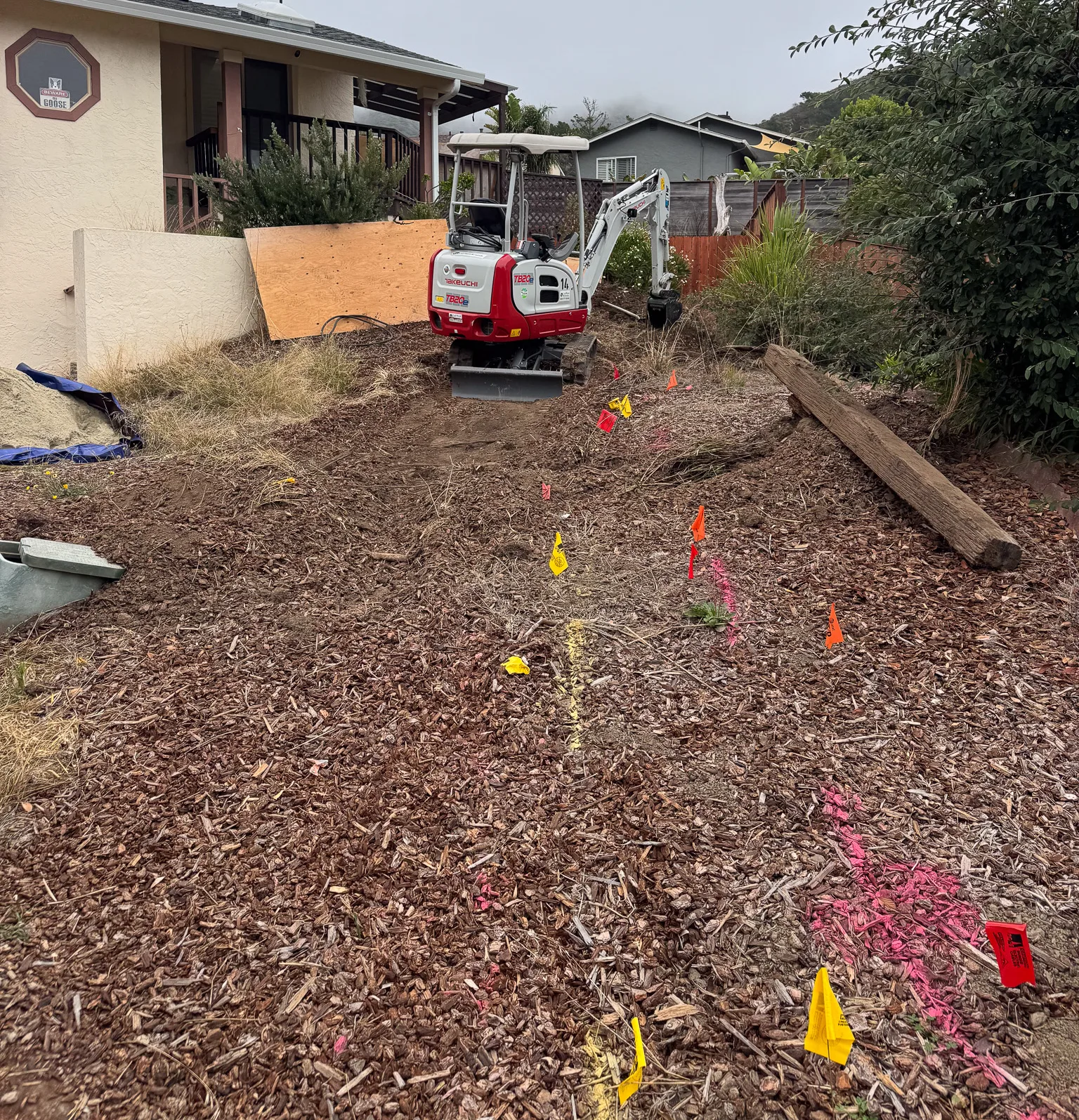
California law requires notice to 811 at least two working days before digging, not counting the day you call. Tickets are good for 28 days. On PG&E jobs, the customer side also schedules a pre-construction meeting with PG&E’s local inspections desk before work starts.
2. Dig and Set Conduit to PG&E’s Design
PG&E’s design sets the route, depth, conduit size, and clearances from gas and other lines, based on its Greenbook standards. The trench has to match that design. Guessing at depth or cutting a shorter route is the fastest way to fail inspection.
3. Inspection With the Trench Open
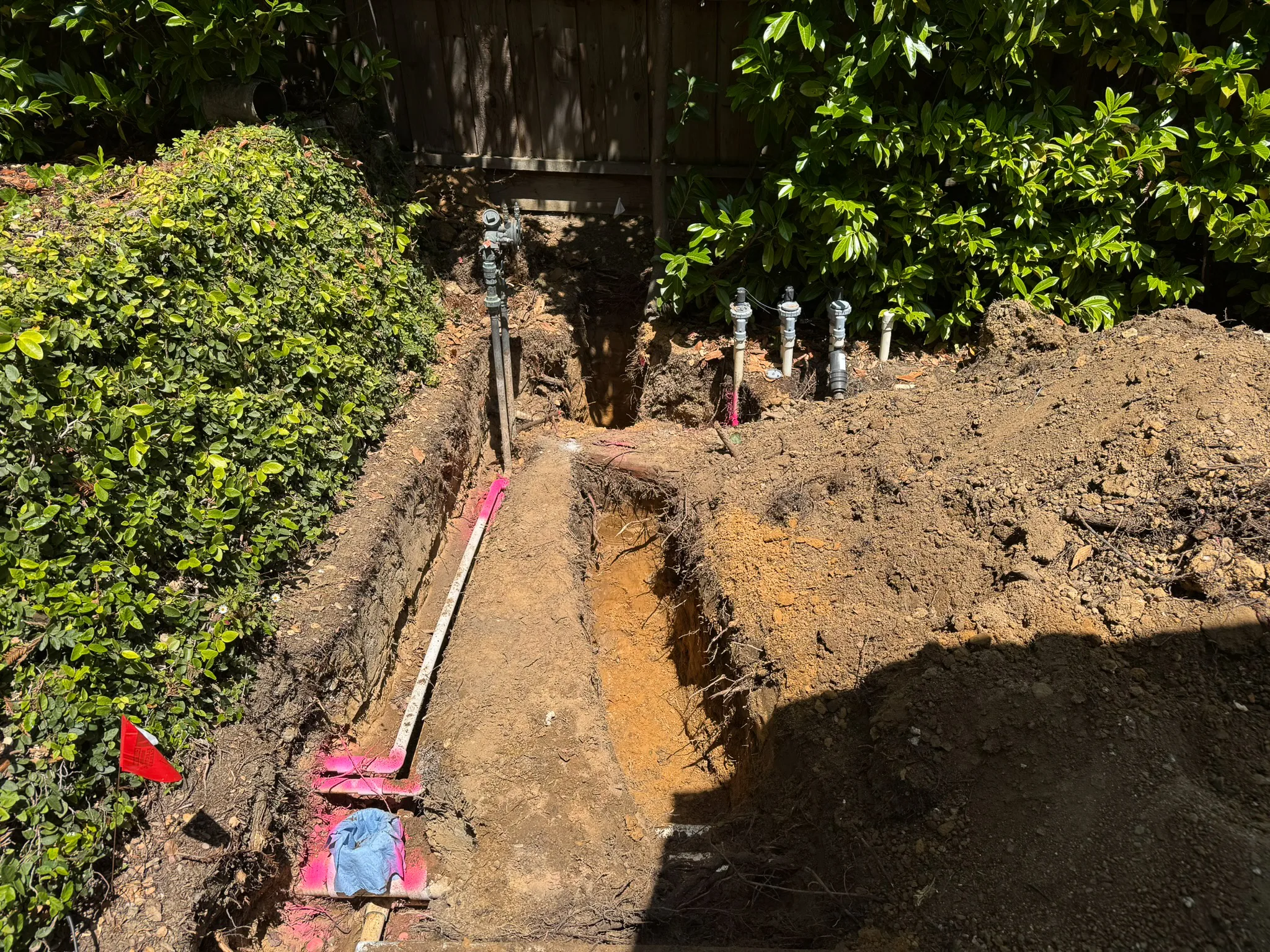
Once the trench is dug and conduit is in, the customer side calls PG&E’s inspections desk to schedule an inspection. Nothing gets covered until it passes. On a residential lot, that means an open trench may sit for a few days, so it needs to be protected and safe for your family, pets, and neighbors.
4. Backfill, Final Inspection, and the City
After the trench passes, it’s backfilled and compacted, and the meter panel goes in. PG&E then does a final inspection, which includes running a mandrel through the conduit to prove it’s clear. Once the city signs off on the electrical work and sends the meter release, PG&E schedules its crew to pull the cable and set the meter.
Planning the Trench Route on Your Property
The design shows where the service goes, but your yard decides how hard it is to get there. Walk the route before you sign anything and look for:
- Trees: Many Bay Area cities protect certain trees, and roots run well past the drip line. Hand digging or hydrovac excavation inside root zones can keep the job moving without damaging the tree.
- Hardscape: Driveways, walkways, and patios in the path add saw cutting, removal, and replacement. Ask early how a crossing will be handled.
- Existing utilities: Gas, water, sewer laterals, and irrigation often share the same side yard. 811 marks the utility-owned lines, not your private ones, so plan for careful digging.
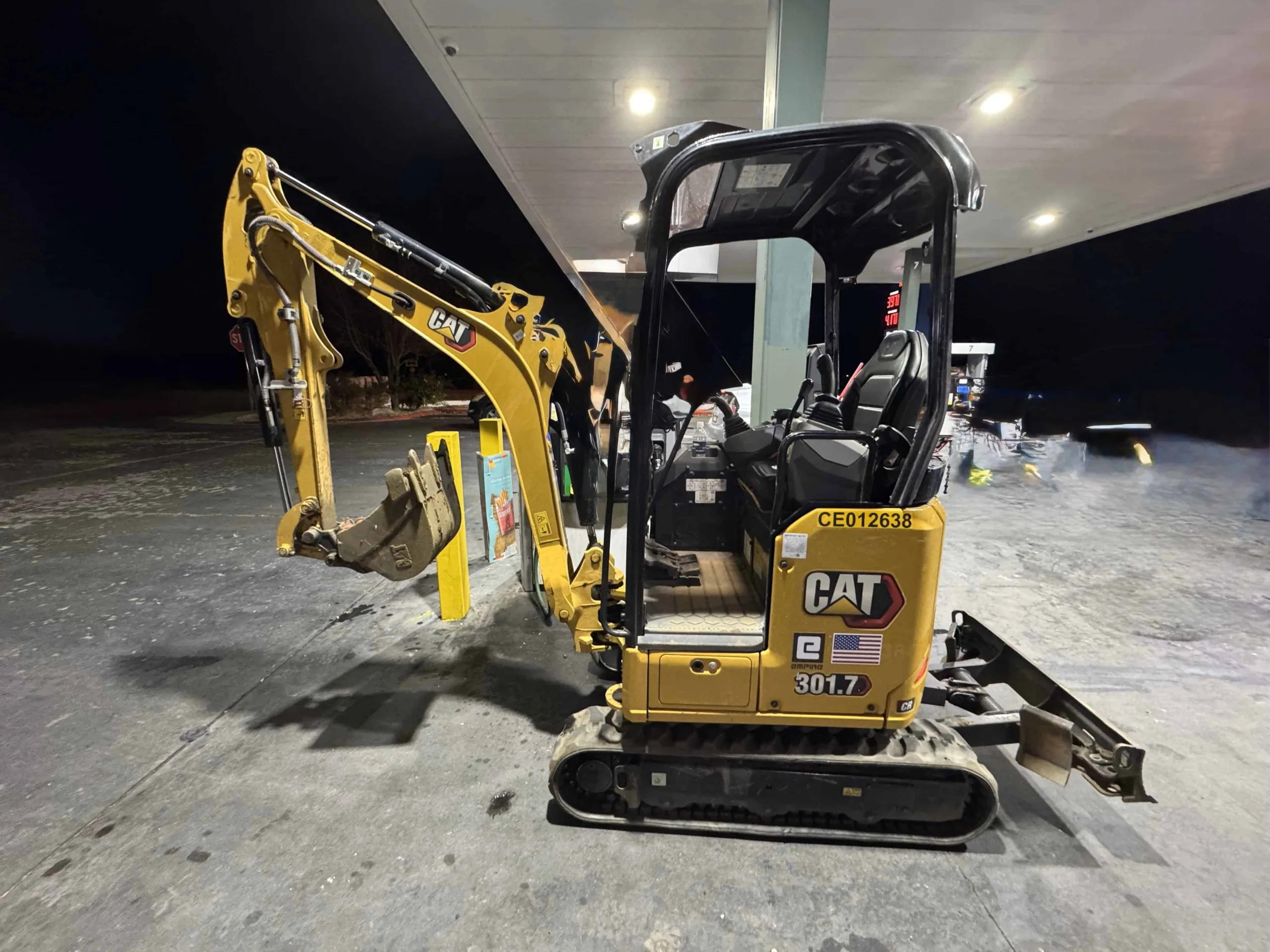
- Access: Narrow side yards and fences decide whether a mini excavator fits or the work is done by hand.
One more check: not every home in our area is on PG&E. Homes in the City of Santa Clara get electricity from Silicon Valley Power, and Palo Alto also runs its own utility. Their specs and inspections differ, so confirm who serves you before anyone digs.
How to Avoid Delays
The trench itself is usually a short part of the job. Most of the calendar is PG&E’s review, design, and crew scheduling. PG&E’s own guide lists an average of about 55 days for design, and 6 to 8 weeks to schedule its crew after the meter release. Timelines vary with the job and PG&E’s workload. You can keep your part from adding to it:
- Get your trenching contractor involved once the PG&E design comes back, so the dig can be scheduled as soon as the contract is signed.
- Share the PG&E design and project number with everyone on the job.
- Line up the dig date with the inspection, so the trench isn’t open longer than it needs to be.
- Decide up front how hardscape and landscaping will be restored, and who’s paying for it.
When to Call an Excavation Contractor
A service trench isn’t a weekend DIY job. PG&E specifically requires a trenching contractor to pass its Operator Qualification training program before they can legally trench for the service upgrade. The trench can also run near live utilities, has to match PG&E’s design, and has to pass inspection before it’s backfilled. Bring in a licensed contractor who does this work regularly, especially if the route crosses hardscape, passes near trees, or shares space with gas and water lines.
Harris Excavation digs PG&E service upgrade trenches for homeowners and electricians across San Mateo and Santa Clara Counties. For a look at tight-quarters work, see our Hillsborough electrical trenching project, where we hand dug around existing sewer and drain lines for a service relocation. We also handle water, sewer, and drain lines through our residential trenching services.
Frequently Asked Questions
Does PG&E dig the trench for a service upgrade?
Generally, no. Under PG&E’s Rule 16, the trench and conduit on private property are usually the customer’s responsibility. PG&E designs the service, inspects the trench, and installs the cable and meter.
Do I need to call 811 for a service upgrade trench?
Yes. California requires notice at least two working days before digging, not counting the day you call, and the ticket is valid for 28 days. Your trenching contractor normally handles this.
How long does a PG&E service upgrade take?
It varies. Digging a residential trench usually takes a day or two, but PG&E’s load review, design, inspections, and crew scheduling can stretch the full project over several months.
Can the trench go under my driveway or near a tree?
Often, yes. Crossings and root zones take more planning and may mean hand digging, hydrovac work, or saw cutting. More answers are on our FAQ page.
Get Your Service Upgrade Trench Done Right
Harris Excavation is a licensed General Engineering Contractor (CSLB #1117960) based in South San Francisco. We are PG&E operator qualified, dig service trenches to PG&E’s design, keep them ready for inspection, and backfill and clean up when they pass.
If a PG&E service upgrade is on your list, send us a quote request with your address and, if you have them, your PG&E project number and design. We’ll review the route and get back to you with a clear written estimate.
