
Most retaining walls look fine all summer. Then the first few winter storms roll through, and suddenly there is a crack that was not there before, a section that is leaning out, or a slow bulge near the middle. Homeowners usually blame the block, the concrete or the builder. Nine times out of ten, the real problem is water.
A retaining wall is built to hold back soil. It is not built to hold back a hillside full of water. When rain soaks the ground behind a wall and has nowhere to go, the load on that wall climbs fast. This guide covers why that happens, the warning signs to watch for this rainy season, how proper retaining wall drainage works, and when it is time to call in a contractor.
Water Is the Real Load on a Retaining Wall
Hydrostatic pressure
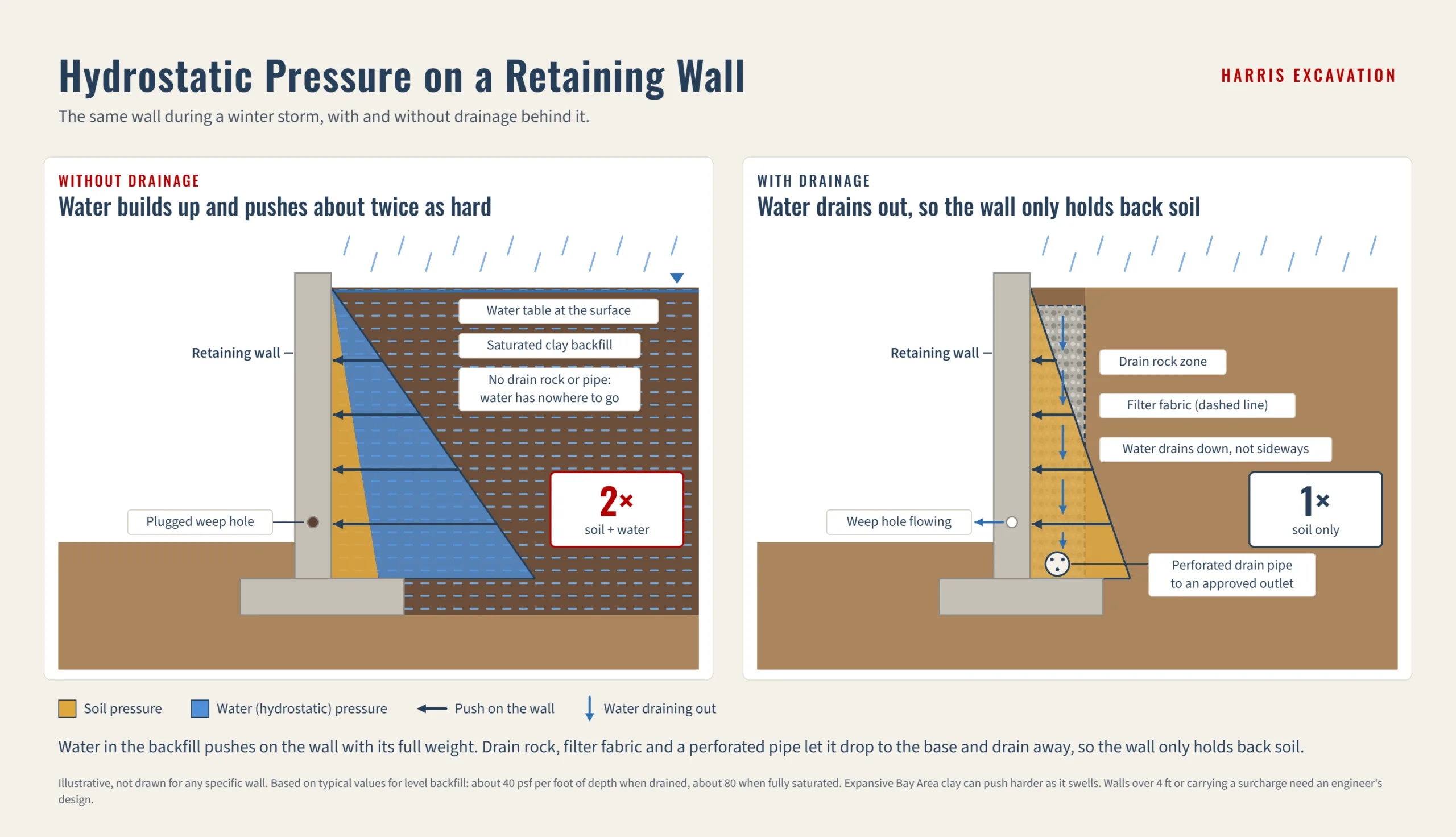
Dry soil pushes on a wall, but it also grips itself and carries some of its own weight. Saturated soil is a different animal. Water fills the gaps between soil particles, adds weight, and pushes outward in every direction. That push is called hydrostatic pressure, and it can add a large load that many walls were never designed to carry.
A properly built wall never lets that water build up in the first place. It gives the water a fast, easy path down and out before it can pile up behind the wall.
Bay Area clay makes it worse
Much of San Mateo and Santa Clara County sits on expansive clay. Clay drains slowly, holds water for days after a storm, and swells as it gets wet. That swelling adds even more push on the back of a wall. If the wall was backfilled with the same native clay that was dug out, there is almost nowhere for the water to go. We cover how different local soils behave in our post on Bay Area soil types and drainage problems.
The Most Common Reasons Walls Fail When It Rains
No drain rock behind the wall
The zone directly behind a wall should be clean, free-draining gravel, not native soil. Drain rock lets water drop straight down to the base instead of soaking in and pushing sideways. When a wall is backfilled with whatever came out of the hole, it behaves like a dam.
A missing, clogged or dead-end drain pipe
A perforated pipe at the base of the wall collects the water that drains down through the rock. That pipe has to go somewhere: daylight on a slope, a storm drain connection where allowed, or another approved outlet. A pipe that was never installed, got crushed, or fills with silt because it was not wrapped in filter fabric does nothing once the storms arrive.
Plugged weep holes
Many concrete and masonry walls have weep holes near the bottom so water can escape through the face. Over time they fill with mud, roots or landscaping. A wall with plugged weeps is a wall that is quietly holding back water.
Surface water pouring in from above
Downspouts that empty right behind the wall, a patio that slopes toward it, or an uphill neighbor’s runoff can send far more water into the backfill than rain alone. Even a well-drained wall struggles when it is the low point for an entire yard. Burying those downspout lines and carrying the water past the wall is often part of the fix.
Built too tall, or carrying extra load
Under the California building code, retaining walls over 4 feet tall, measured from the bottom of the footing to the top of the wall, need a building permit, and so do shorter walls that hold up a surcharge such as a driveway, a structure or a steep slope above. Some cities set tighter limits near slopes. Walls that went up without engineering or a permit often lack the footing and drainage they need to make it through a wet winter.
Warning Signs to Watch for This Winter
Walk your walls after the first few storms and again in the middle of the season. Look for:
- The wall leaning out at the top, or a bulge partway up the face.
- New cracks, or old cracks that are getting wider.
- Water seeping through joints or out of the face instead of from a drain outlet.
- Weep holes or the drain outlet staying dry during heavy rain.
- Soil settling, sinkholes or cracks in the ground behind the wall.
- Blocks shifting, or caps loosening on a segmental block wall.
One sign by itself is worth watching. Two or more, especially movement that gets worse after each storm, means the wall needs attention before the next big rain. If the wall holds up a driveway, a structure or a neighbor’s yard, have it looked at right away. Our End-of-Winter Property Walk covers a full checklist for the rest of your property.
What Good Retaining Wall Drainage Looks Like
Whether the wall is new or being repaired, the drainage behind it comes down to a few parts working together:
- Drain rock zone: clean gravel placed directly behind the wall so water drops to the base instead of pushing sideways.
- Filter fabric: separates the rock from the surrounding soil so fines do not wash in and clog it.
- Perforated drain pipe: runs along the base of the wall to collect the water.
- A real outlet: the pipe carries water to daylight, a storm drain connection or another approved discharge point, never onto a neighbor’s property.
- Surface control: grading and downspout lines above the wall that keep runoff from pouring into the backfill.
The exact design depends on the wall height, soil, slope and what the wall is holding up. Taller walls and walls under a surcharge should follow a plan from an engineer. Your local building department will tell you what it needs to see.
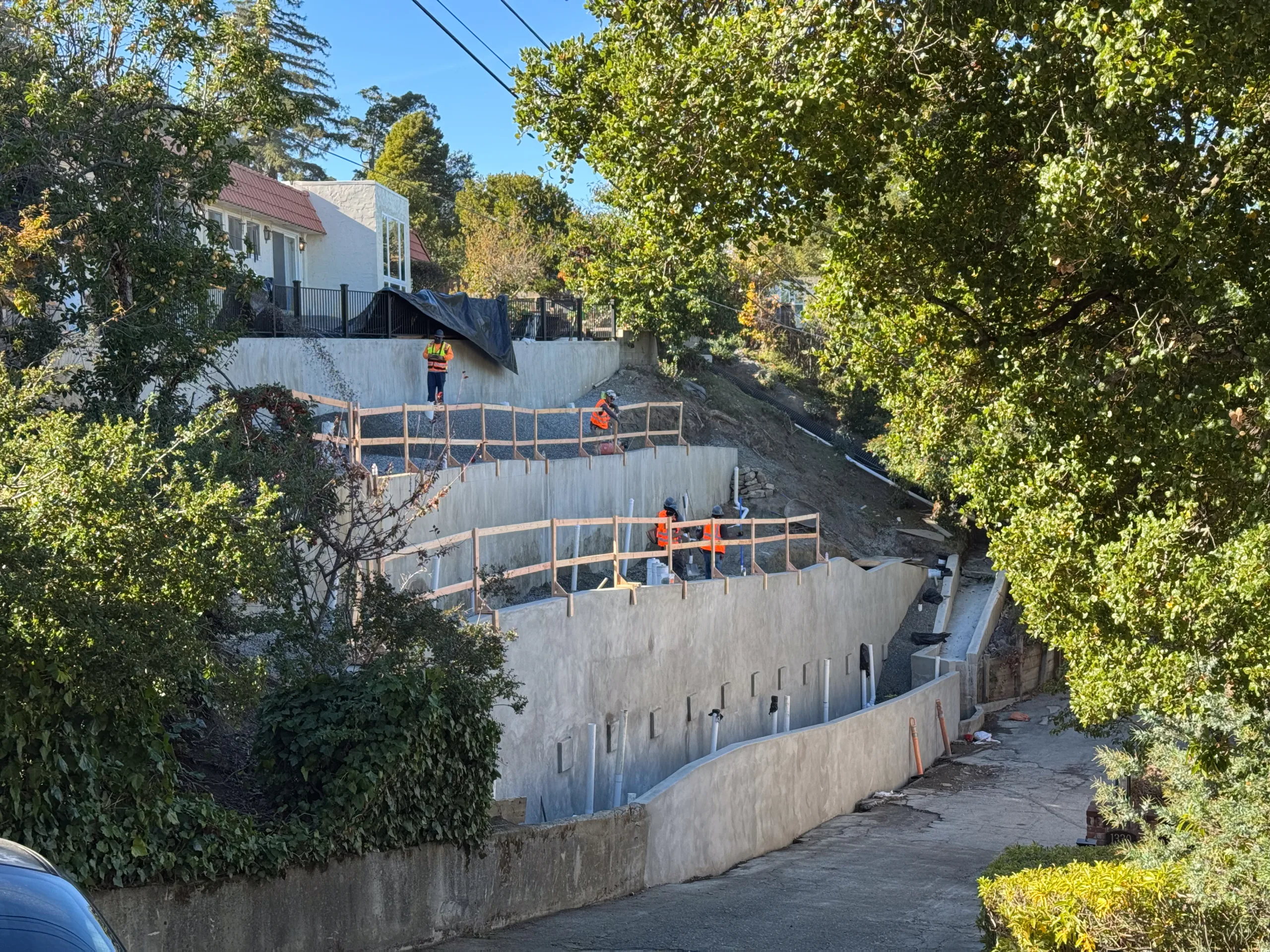
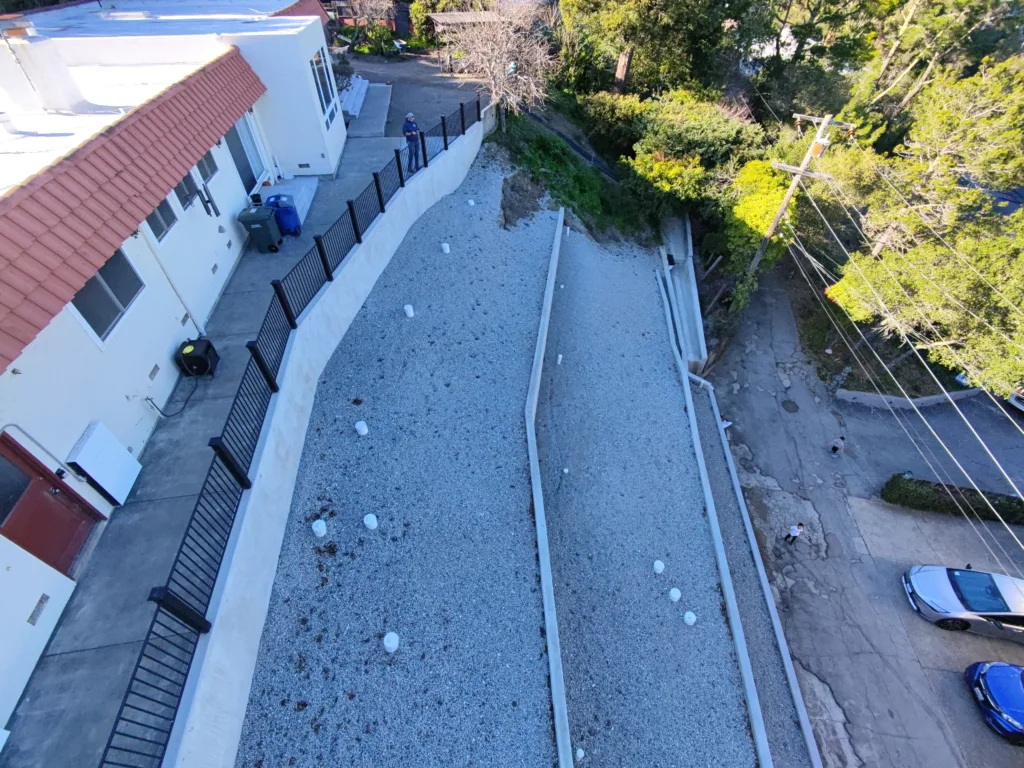
Getting all that rock in place is heavy work. On our Millbrae retaining wall backfill project, we placed more than 500 tons of drain rock behind three walls in two days using a slinger and a reloader. Doing that by wheelbarrow would take weeks.
What You Can Do Now, and When to Call a Pro
A few things are fair game for any homeowner before the next storm:
- Clear mud, leaves and roots out of weep holes and drain outlets.
- Redirect downspouts so they do not empty behind the wall.
- Keep the ground above the wall from ponding, and keep heavy loads like vehicles, stockpiles or hot tubs back from the top.
- Take dated photos of cracks and lean so you can tell if things are getting worse.
Past that, the fix almost always means digging out behind the wall. That is excavation work: removing saturated clay, installing fabric, pipe and drain rock, tying the outlet into a proper discharge point, and compacting what goes back on top. It is the kind of job where the drainage, not the wall face, decides how long the repair lasts. A wall that is actively moving, holding up a structure, or over 4 feet tall also calls for an engineer and a permit before the repair starts.
Harris Excavation handles the digging, backfill and residential drainage that keep retaining walls standing through Bay Area winters.
Frequently Asked Questions
Why is my retaining wall leaning after it rains?
Usually because water is building up in the soil behind it. Saturated soil weighs more and pushes harder. Without a drain rock zone and a working drain pipe, that pressure can tip or bulge the wall.
Can you add drainage to an existing retaining wall?
Often, yes. It means excavating behind the wall, installing fabric, perforated pipe and drain rock, and connecting an outlet. Whether that is enough, or the wall needs rebuilding, depends on how far it has already moved.
Do I need a permit for a retaining wall in California?
Under the state building code, walls over 4 feet from the bottom of the footing to the top, or any wall supporting a surcharge, need a permit. Some cities are stricter, especially near slopes, so check with your local building department.
What should go behind a retaining wall instead of dirt?
Clean, free-draining drain rock wrapped in filter fabric, with a perforated pipe at the base. Native clay holds water and should stay out of the zone right behind the wall.
Keep Your Wall Standing Through Winter
A retaining wall is only as good as the drainage behind it. If your wall is leaning, cracking or weeping in the wrong places, the sooner the water gets a way out, the less it costs to fix. Tell us about your wall and we will put together a free quote.
