
Walk around your house during the next good rain and watch where each downspout lets go. If the answer is “right next to the foundation,” you’re putting most of your roof’s water into the soil you least want wet.
A roof collects a lot of water, and gutters do their job by gathering all of it into a few downspouts. That concentrated stream has to go somewhere. When it dumps at the base of the wall, it soaks in along the foundation, works its way into crawlspaces, and keeps planting beds soggy all winter.
An underground downspout drain fixes that by carrying roof water through a buried pipe to a spot where it can safely leave the property or soak in. This guide covers why foundation discharge causes trouble, what California’s code expects, how a buried line should be built, and where the water can actually go.
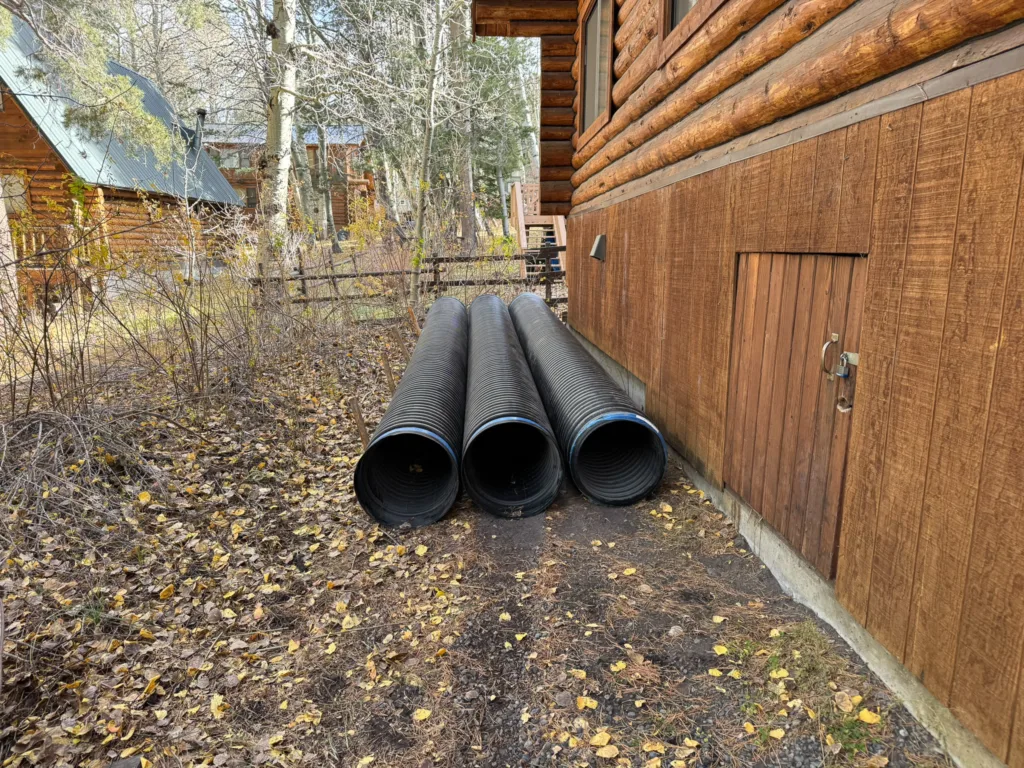
Why Downspouts at the Foundation Cause Problems
Rain falling on open ground spreads out. Rain coming off a downspout doesn’t. It lands in one spot, every storm, all season long. Over time that can cause various types of damage:
- Wet crawlspaces and damp slabs. Water that soaks in at the wall has a short trip to the space under your house.
- Soil movement. Much of the Bay Area sits on clay that swells when wet and shrinks when it dries. Soaking the same spot every winter makes that cycle worse right where your footings are.
- Erosion and washouts. A steady stream cuts channels in beds, undermines walkways and carries mulch and soil into the street. This can be especially apparent in the Eastern Sierras, where the ground will erode with water movement.
Soil type matters a lot here. Our guide to Bay Area soil types and drainage problems explains why clay and bay mud hold water instead of letting it drain away.
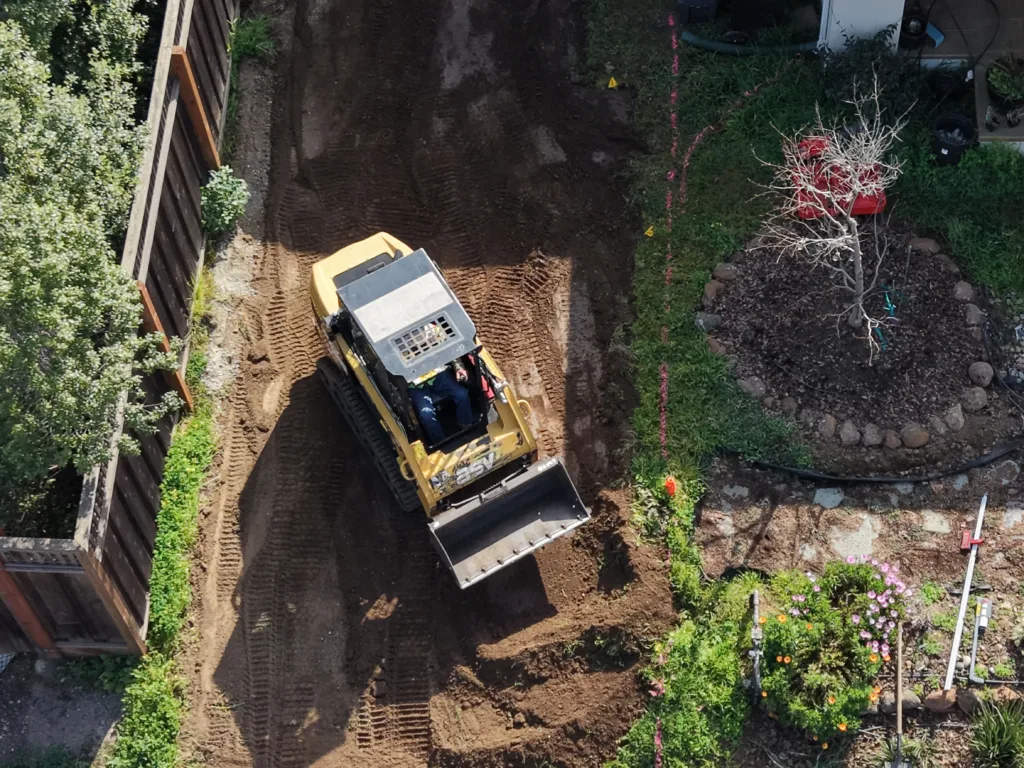
What California’s Code Says About Roof Water
The California Residential Code sets two baselines that are worth knowing, even if you’re not building anything new:
- Grade away from the house. Section R401.3 says lots shall be graded to drain surface water away from foundation walls, with the ground falling at least 6 inches within the first 10 feet. Where a lot line, wall or slope makes that impossible, drains or swales have to carry the water away instead, and hard surfaces within 10 feet of the foundation need at least a 2 percent slope away from the building.
- Move roof water away on expansive soil. Section R801.3 says that where expansive or collapsible soils are known to exist, homes need a controlled way to get roof water off the roof and discharge it to the ground at least 5 feet from the foundation walls, or to an approved drainage system.
Older homes may not necessarily have these systems in place, and plenty of yards have been regraded, paved or landscaped since. Even natural plant growth and swelling can change the slope of your yard over the years. The takeaway is simple: roof water should leave the house, not sit next to it.
How an Underground Downspout Drain Works
The idea is simple: connect the bottom of the downspout to a buried pipe, run that pipe downhill to a safe outlet, and let gravity do the rest. The details are what decide whether it works for twenty years or clogs by spring.
Solid Pipe, Not Perforated
A downspout line is meant to carry water, not collect it. That means solid pipe all the way to the outlet. Perforated pipe leaks roof water back into the soil a few feet from the house, which defeats the point. Smooth-wall pipe is also easier to clean than flexible corrugated tubing, which tends to sag and trap debris in its ridges.
A Steady Fall With No Low Spots
The trench has to be cut so the pipe runs downhill the whole way. A belly in the line holds standing water and sediment, and that’s where clogs start. On flat lots, getting enough fall to reach an outlet is often the hardest part of the job, and it’s why we take the time to use our laser to check existing and trench grades to make sure we are getting that fall.
Debris Control and Cleanouts
Leaves and roof grit come down the downspout with the water. A leaf screen or debris filter at the connection, plus a cleanout where lines join or change direction, makes it possible to flush the system instead of digging it up.

Where the Water Can Go
Picking the outlet is the real design decision. The right answer depends on your slope, your soil, how close the neighbors are and what your city allows.
Daylight to a Lower Part of the Yard
If your lot slopes, the simplest outlet is a pipe that comes out of the ground at a lower spot, well away from the house, onto rock or another stable surface so it doesn’t start its own erosion problem. It should never send water onto a neighbor’s property.
Pop-Up Emitter
On gentler lots, the line can end at a pop-up emitter set in the lawn or a bed. The lid lifts when water arrives and closes when it stops. Emitters work best with enough fall behind them to push water out, and they need an occasional check for clogs.
Dry Well or Rain Garden
Sending roof water to a gravel-filled dry well or a planted rain garden lets it soak in away from the house. This works well in sandy or loamy ground. In tight clay it can fill up and sit, so it needs to be sized to the soil, and sometimes it isn’t the right fit at all.
Curb or Storm Drain
On flat lots with nowhere else to go, the line may run to the street. Cutting through a curb or tying into a public storm system usually involves the city, so check with public works before planning on it. Only clean roof water belongs in the storm drain, since it flows to creeks and the Bay without treatment.
Not the Sanitary Sewer
Roof water doesn’t belong in your sewer line. Sewer systems aren’t built to carry storm runoff, and extra rainwater can overload them during big storms. The exception to this rule is the City of San Francisco, which has a combined sewer-storm system (one of the few left in the country).
Downspout Drain vs. French Drain
People mix these up, and some contractors run them together in one trench. They do opposite jobs:
- A downspout drain is solid pipe. It takes water that’s already collected and carries it away without letting any out along the way.
- A French drain is perforated pipe in gravel. It collects groundwater and surface water from the soil around it and moves it to an outlet.
Dumping a downspout into a French drain sends a heavy surge of roof water into a pipe designed to pick water up, not push it out, and it can end up saturating the very soil the French drain is supposed to dry out. The two can share a trench, but they should stay separate pipes. Our guide to how French drains work covers when you need one.
Quick Fixes vs. When to Call a Contractor
A splash block or an above-ground extension can buy you time this season. Point it downhill, away from the house, and clean your gutters so the water actually reaches the downspout. But extensions get kicked, mowed over and moved, and they don’t help when the ground near the house slopes the wrong way.
It’s time for a buried line, or a bigger drainage fix, when you see:
- Water in the crawlspace or damp spots on a slab after storms.
- Ponding or mud against the foundation that comes back every rain.
- An existing buried line that backs up or overflows at the downspout.
- A flat or reverse-sloped yard where water has nowhere obvious to go.
Our residential drainage work covers buried downspout lines, French drains and regrading. Any buried line should start with an 811 call so underground utilities get marked first. If the line has to run past utilities or under hardscape, our residential trenching crew handles tight-access digging by hand or with compact equipment.
Frequently Asked Questions
How far from the house should a downspout discharge?
Where expansive or collapsible soils are known to exist, the California Residential Code calls for roof water to discharge at least 5 feet from the foundation walls or into an approved drainage system. Many Bay Area lots have expansive clay, so farther is usually better, as long as the outlet is somewhere the water can safely go.
Can I connect my downspouts to my French drain?
It’s better not to. A French drain is built to collect water from the soil, and roof water can overwhelm it. Run downspouts in their own solid pipe, even if it shares a trench with the French drain.
Why does my underground downspout drain back up?
Usually it’s leaves and grit packed into the pipe, a low spot where sediment settles, a crushed section, or roots. A plumber’s camera or a flush from a cleanout will often show which one. A line with no fall or no cleanouts may need to be rebuilt.
Do I need a permit to bury downspout lines?
A simple line that stays on your property often doesn’t, but it depends on your city. Work in the public right-of-way, like cutting a curb outlet, usually does. Check with your city’s building or public works department before you start.
Get Roof Water Away From Your Foundation
Harris Excavation is a licensed General Engineering Contractor (CSLB #1117960) based in South San Francisco. We install underground downspout drains, French drains and yard regrading for homes across San Mateo and Santa Clara Counties.
If your downspouts are dumping at the foundation, send us a quote request with your address and a few photos of where the water goes. We’ll look at the slope, the soil and your outlet options, and send a clear written estimate.
