
Whether you are setting fence posts, running a drain line, planting a tree, or trenching power out to a garage, there is a good chance something is already buried in your yard. Gas, electric, water, sewer, communication lines, and storm drains are everywhere, and always show up in places folks least expect them to.
That is why the rule is simple: call 811 before you dig. In California, it is free, it is fast, and for most excavation work it is the law. This guide walks through how the process works, what the dig law actually requires, the mistakes we see homeowners make, and when it makes sense to hand the digging to a licensed contractor.
What Happens When You Call 811
811 is the national call-before-you-dig number. In Northern California, your request goes to USA North 811, the regional One-Call notification center. You can dial 811 from any phone or submit a ticket online, however USA North recommends the online route since phone lines can back up. The service is 100% free as the utility companies are required to fund 811.
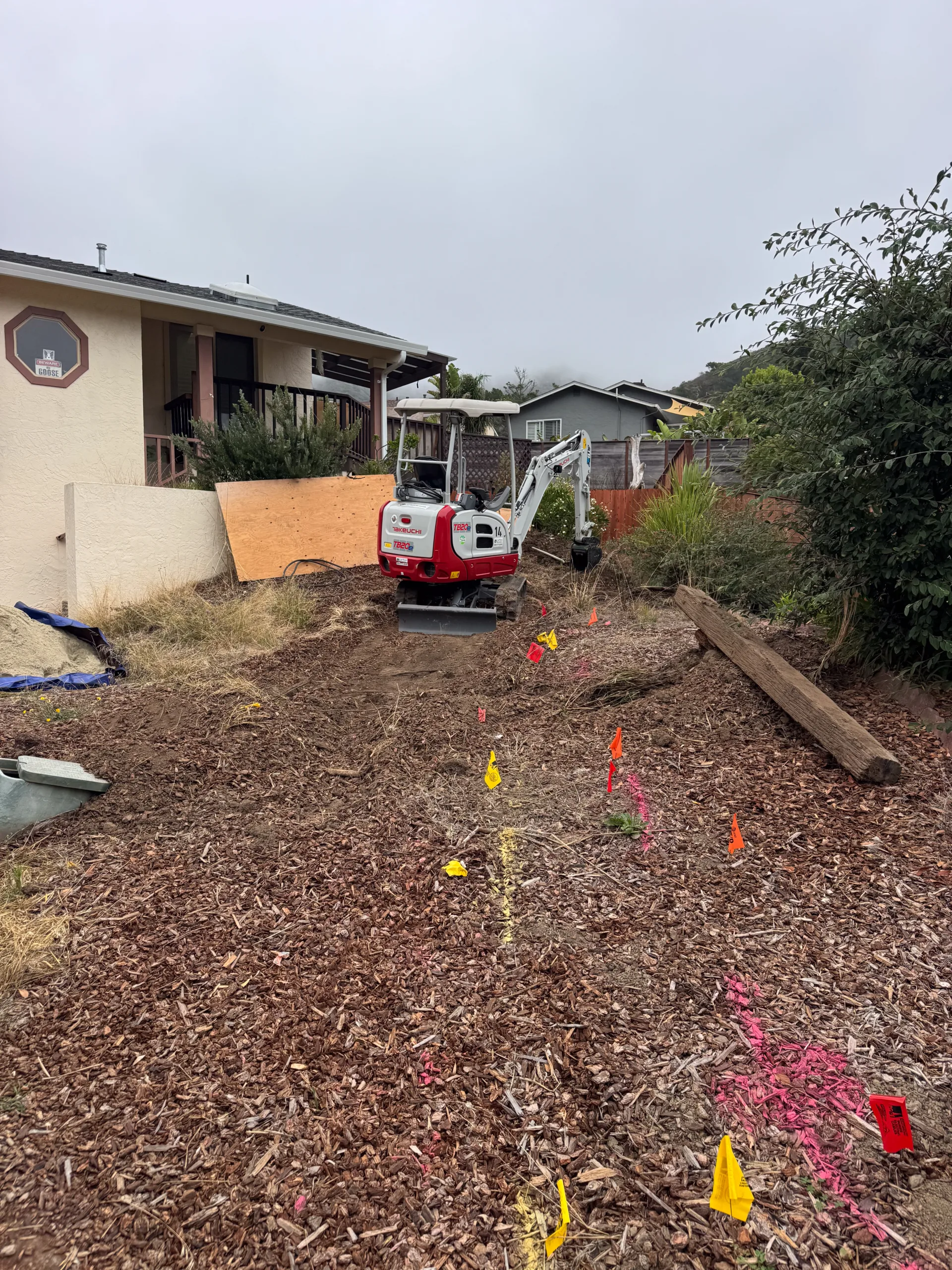
Once your ticket is in, the center notifies the utility companies with lines in your area. Each one either marks its lines on the ground with color-coded paint, flags or stakes, or lets you know it has no lines in the way. Your ticket number is your proof that you called, so keep it handy for the whole project.
The timeline at a glance
- Submit your ticket at least two working days before you dig, and no more than 14 calendar days ahead.
- A working day under the law is Monday through Friday, 7 a.m. to 5 p.m., not counting state and federal holidays. A ticket submitted Friday afternoon does not clear over the weekend.
- Do not start digging until every utility on your ticket has responded.
- Your ticket is valid for 28 days. If the work runs longer, renew it before it expires.
California’s Dig Law in Plain English
The rules come from California Government Code section 4216, often called the dig law. It defines excavation broadly: grading, trenching, digging, drilling, augering, boring and more, whether by hand tools or machines. Here is what it asks of anyone doing that work:
Mark your dig area in white first
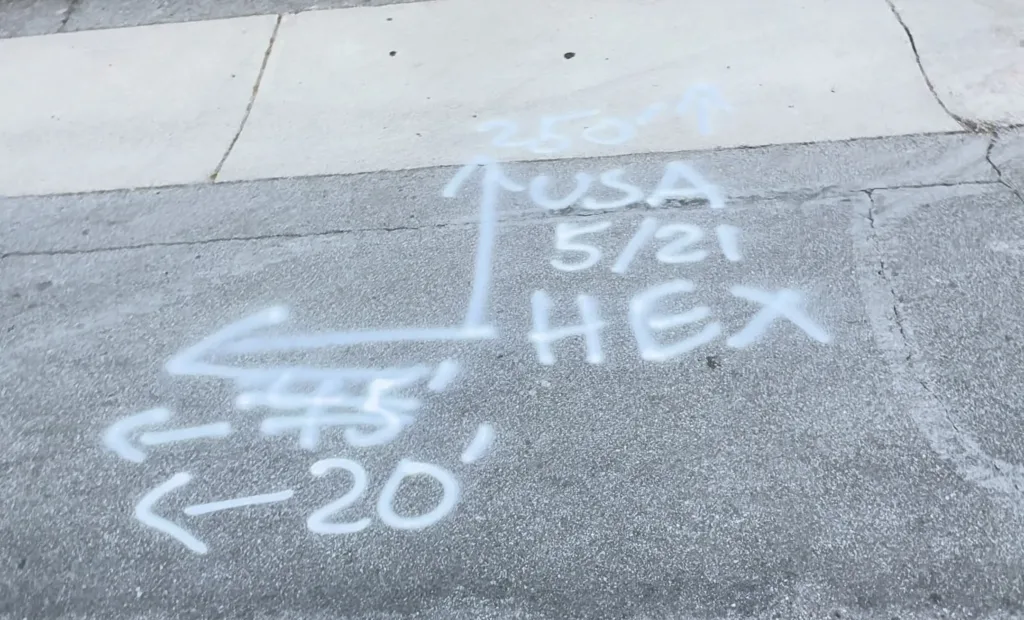
Before you submit the ticket, outline where you plan to dig with white paint. Where paint does not work, white flags or stakes are acceptable. This tells the locators exactly where to look, so they are not guessing at your whole property. Your paint marks should act as the boundaries to the excavation area and list three things: The length and width of your excavation, your name or company name, and the date you put the marks down.
Respect the 24-inch tolerance zone
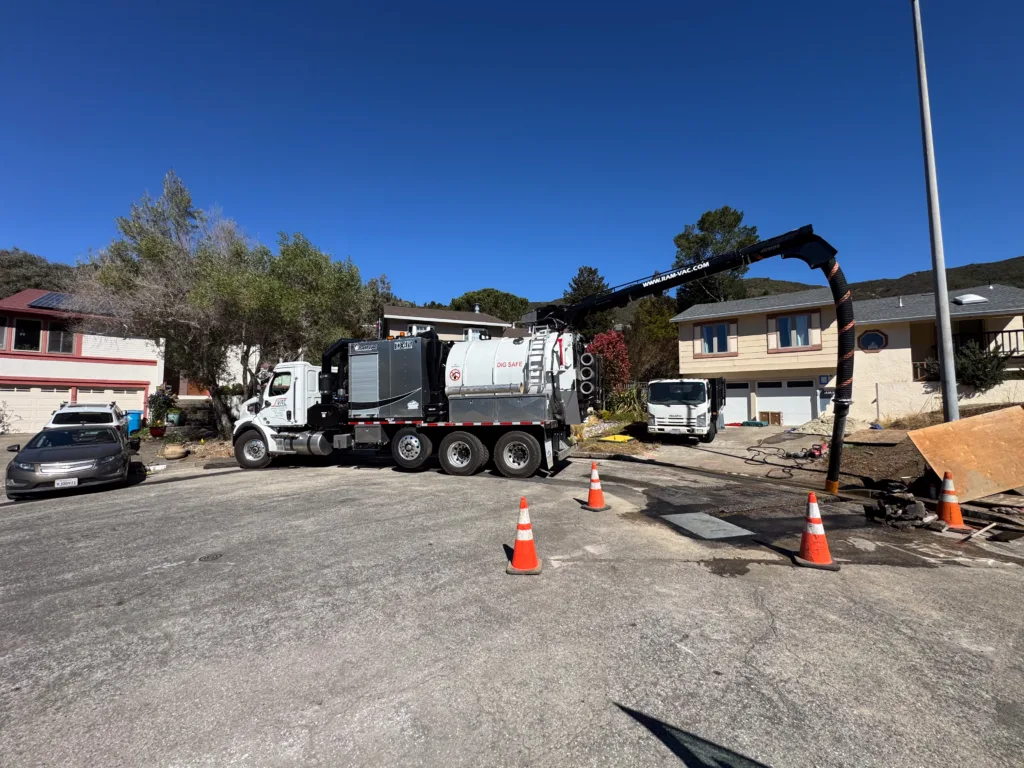
A mark shows where a line is approximately, not exactly. The law sets a tolerance zone of 24 inches on each side of a marked line. Inside that zone, you have to find the line’s exact position by hand before any power equipment comes in. Vacuum excavation is also allowed, and is our preferred method for excavating around crowded utility lines. Check out our Cupertino Hydroexcavation project to learn more about this awesome equipment.
Keep the marks alive
Rain, mowing and foot traffic wear marks away. If they fade before you finish, contact 811 and request a re-mark rather than digging from memory. If you request a remark, you must wait until all utilities respond to your remark before proceeding with excavation.
Penalties are real
Violations of the dig law can carry civil penalties of up to $10,000 for negligent violations and up to $50,000 for knowing and intentional ones. That is before the cost of repairing a damaged line, which can run into the hundreds of thousands.
Do Homeowners Have to Call 811 in California?
This is the question we hear most. The law does carve out a narrow exemption: a homeowner improving their own principal residence, not acting as a contractor, on work that does not need a permit, is not bound by section 4216. If you hire a licensed contractor, the contractor is the excavator and is responsible for the ticket.
An exemption from the paperwork is not protection from a buried gas or electric line, though. USA North 811 asks everyone to call, even for shallow digging, because many lines are buried shallow. It is free, and it takes a few minutes online. Our advice is the same: if a shovel is going in the ground, call 811 before you dig. It’s always better to be safe than sorry.
Mistakes Homeowners Make After the Marks Go Down
Assuming every line is marked
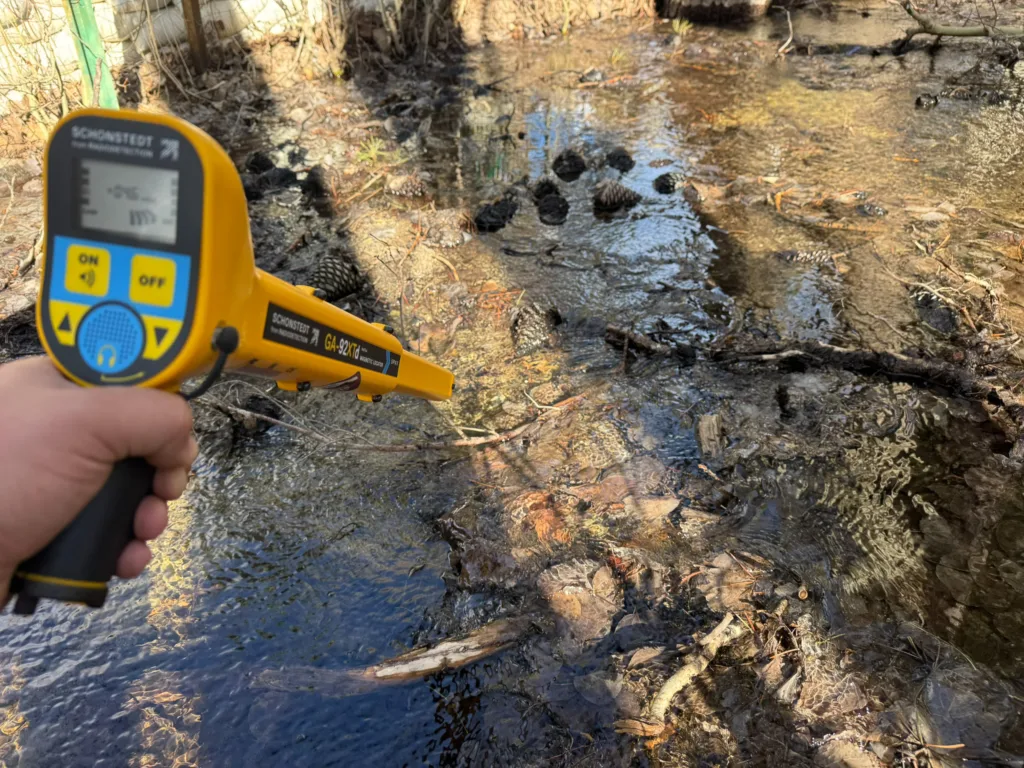
Utilities only mark the lines they own. Anything installed on your side of the meter is usually yours, and 811 will not mark it. That includes irrigation and sprinkler lines, landscape lighting, a gas line to a barbecue or pool heater, and power run out to a shed, gate or ADU. A private locating service can find these before you dig.
Trusting the mark to the inch
Locating equipment is good, but it is not perfect, and depth is never guaranteed. That is the whole reason for the 24-inch tolerance zone. Expose the line carefully by hand before you run anything heavier.
Letting the ticket lapse
Weekend projects stretch out. If your 28 days run out before the trench is backfilled, renew the ticket before it expires. If it lapses, work stops until a new ticket is issued and two more working days pass.
Trying to fix a damaged line yourself
If you nick or break a line, report it to the utility right away. If gas is escaping or there is any threat to safety, get everyone away from the area and call 911. Never try to patch a damaged utility line on your own.
When to Bring In a Licensed Contractor
Planting a shrub between marks is one thing. Running a trench across a yard full of paint is another. It is worth calling a contractor when:
- Your trench has to cross or run alongside marked gas or electric lines.
- The job needs a permit, such as a new utility service, sewer lateral or drainage tie-in.
- The marks are so close together that hand digging the whole run is not practical.
- You need the work done on a schedule, like an inspection or a utility appointment.
A licensed excavation contractor handles the 811 ticket, white-lines the work, and digs to the tolerance-zone rules. On tight sites, hydro-excavation uses pressurized water and a vacuum truck to expose lines without the risk of a bucket tooth.
Harris Excavation digs around live utilities every week, from residential trenching for water, power and drainage to PG&E service upgrade trenches, across San Mateo County, Santa Clara County and the Eastern Sierra.
Frequently Asked Questions
Does it cost anything to call 811?
No. Submitting a ticket and having the utilities mark their lines is free.
How far ahead should I call 811 before I dig in California?
At least two working days before you start, and no more than 14 calendar days ahead. Working days are weekdays from 7 a.m. to 5 p.m., excluding holidays.
Will 811 mark my sprinkler lines or the power to my shed?
No. Utilities only mark their own lines. Private lines on your side of the meter need a private locating service.
How long is an 811 ticket good for?
28 days. If your work continues past that, renew the ticket before it expires.
Dig Smart, Dig Once
A free 811 ticket and a little patience is the cheapest insurance on any digging project. If your trench crosses marked lines or needs a permit, Harris Excavation can take care of the ticket, the careful digging and the backfill. Tell us about your project and we will put together a free quote.
