
In the Eastern Sierra, the ground freezes every winter, and that one fact shapes every foundation dig in Mono County. A footing that sits too shallow can be lifted by freezing soil, crack the concrete and throw doors and windows out of square. Getting foundation excavation in Mono County right comes down to three things: digging below the frost line your jurisdiction requires, bearing on good soil, and never pouring on frozen ground.
This guide covers what frost depth means, the numbers Mono County and the Town of Mammoth Lakes actually use, what changes on rocky or wet sites, and how to plan a dig around the short building season.
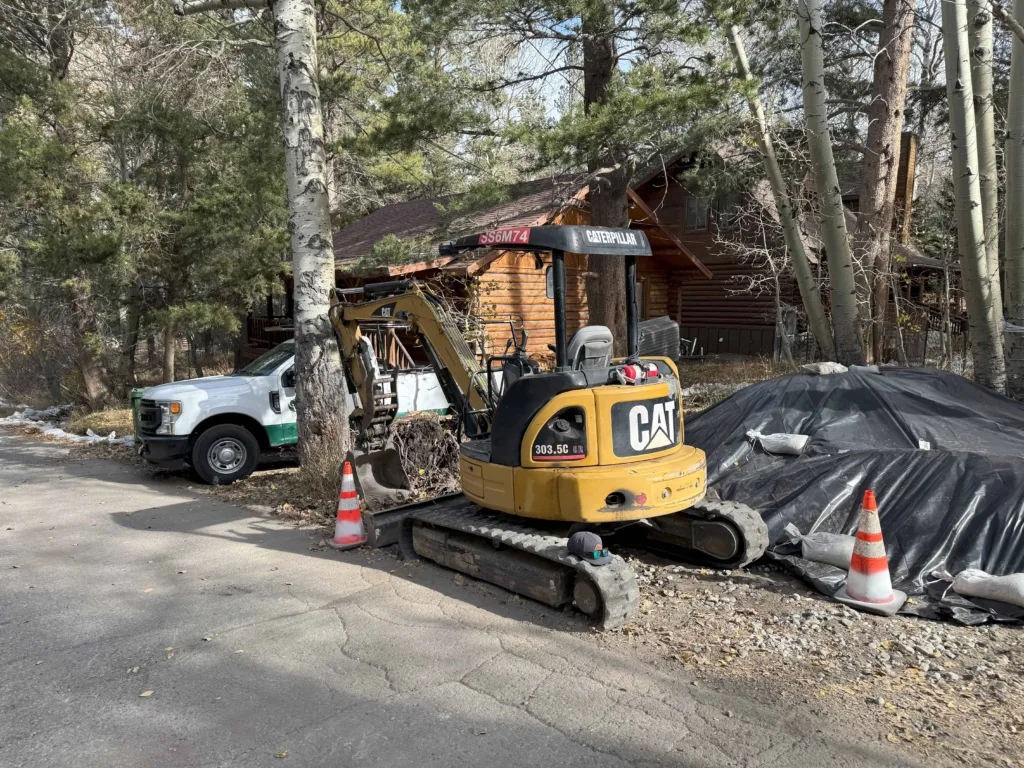
What Frost Depth Means for Your Foundation
Frost depth, or the frost line, is how deep the ground is expected to freeze in winter. When water in the soil freezes, it expands. In silty or fine-grained soil, ice can build up in layers and push the ground upward. That movement is called frost heave, and it doesn’t push evenly. One corner of a footing rises, another doesn’t, and the foundation cracks.
The fix is simple in principle: put the bottom of the footing below the depth where the ground freezes, so the soil it bears on stays stable year-round. The California Residential Code requires exterior footings to be at least 12 inches below undisturbed ground, and foundations must be protected from frost, most often by extending below the frost line set by the local building department. The code also says footings can’t bear on frozen soil unless the frozen condition is permanent.
Frost Depth Requirements in Mono County
Which number applies depends on who issues your building permit. Mono County has two building departments that matter here: the County, for unincorporated communities, and the Town of Mammoth Lakes, inside Town limits.
Unincorporated Mono County
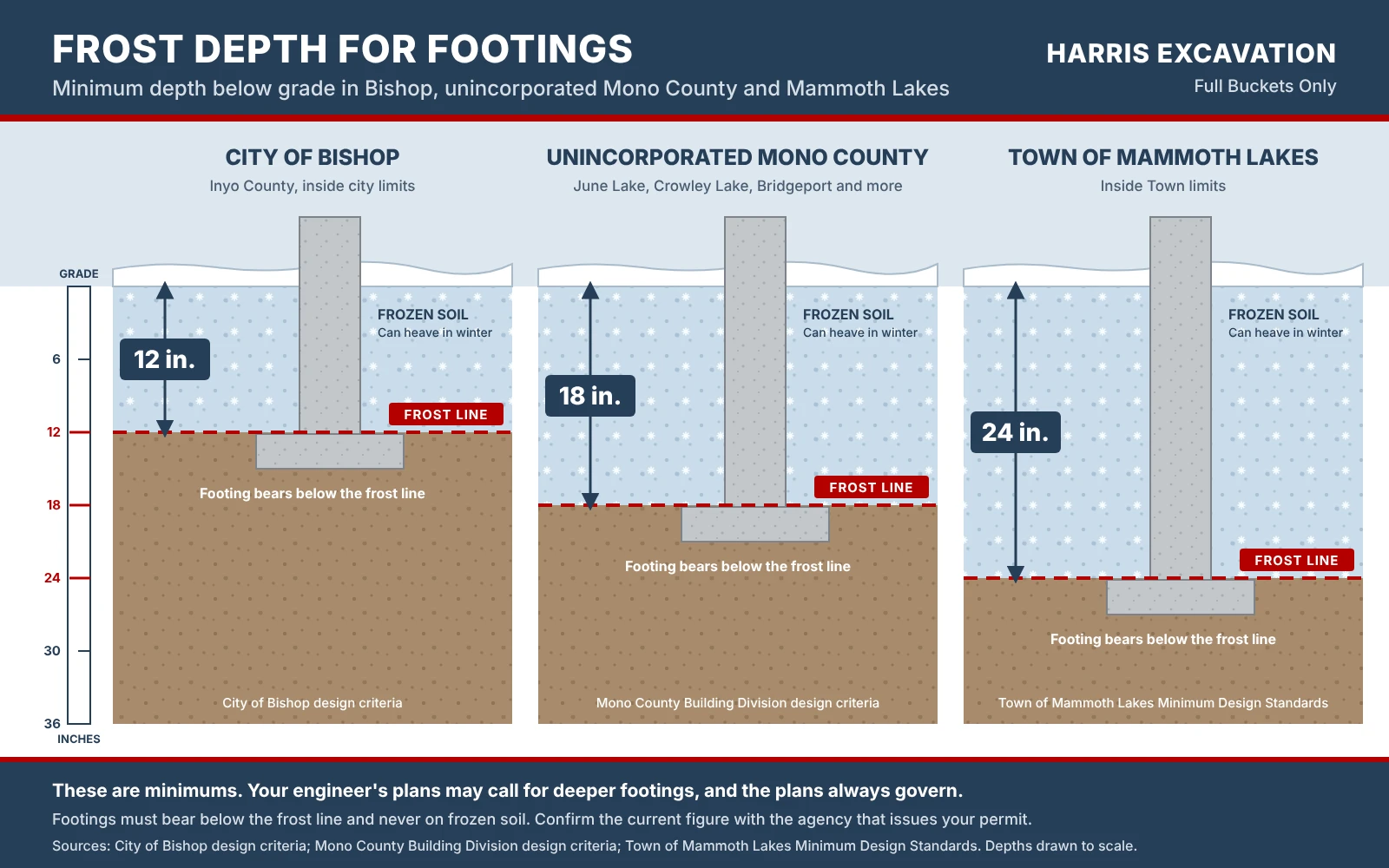
The County Building Division’s design criteria list a frost depth of 18 inches below exterior finished grade minimum. That applies countywide, from Walker and Coleville down to Crowley Lake, Swall Meadows and June Lake. The same criteria require soils documentation for all structures.
Town of Mammoth Lakes
Inside Town limits, the Minimum Design Standards say the frost line is a minimum of 24 inches below grade, and footings and foundations must extend below it. If you’re building in Mammoth, plan on that deeper number.
Bishop and the Owens Valley
Bishop sits just over the line in Inyo County, so Mono County’s numbers don’t apply there. Inside city limits, the City of Bishop’s design criteria list a frost depth of 12 inches. Outside city limits, confirm the frost depth with Inyo County before your engineer finalizes the footing design. Our Bishop excavation page covers the local permit picture.
Keep in mind these are minimums. Your engineer’s plans may call for deeper footings because of soil conditions, heavy snow loads or the structure itself, and the plans always govern. Design criteria get updated with each code cycle, so check the current version with the building department when you apply.
What Changes the Dig on a Sierra Lot
Hitting a number on a tape measure is only part of a good foundation excavation. Eastern Sierra sites bring a few conditions that change how the dig goes.
- Soils documentation. Because Mono County requires soils documentation for every structure, your engineer will usually specify what the footings need to bear on. The excavation has to reach that material, not just the minimum depth.
- Rock and boulders. Granite and buried boulders are common. The code allows a structure built on solid rock as one form of frost protection, but whether a given rock surface qualifies is a call for your engineer and inspector.
- Loose volcanic and decomposed soils. Sandy, pumice-rich ground can cave into a trench. Sidewalls may need to be cut back or shaped to stay safe and hold their dimensions.
- Water in the hole. Snowmelt and high groundwater soften bearing soil. Footings that fill with water need to be pumped and cleaned out to firm material before the pour.
- Drainage around the foundation. Wet soil is what heaves. Grading the ground away from the house and giving roof and melt water a path away helps the foundation as much as the depth does. Our residential drainage work covers French drains, downspout lines and dry wells.
Timing a Foundation Dig Around Winter
Frost doesn’t just set how deep you dig. It also sets when. Once the ground freezes, a footing can’t be poured on it, and an open excavation left over winter fills with snow and meltwater.
- Dig and pour close together. The less time a footing sits open, the less chance it softens or freezes before inspection and concrete.
- Line up the inspection. Footings are typically inspected before concrete goes in. Schedule it with the building department ahead of time so a finished dig doesn’t wait.
- Know the County’s fall cutoff. Mono County’s grading specifications for land development projects in the unincorporated county say construction must stop by October 15, with exposed soil stabilized for winter.
- Use the winter to plan. Get your survey, soils documentation, permits and bids done in the off-season so you can dig as soon as the ground opens up.
For more on closing out a site before the snow, read our guide to earthwork to finish before winter in Mammoth Lakes.
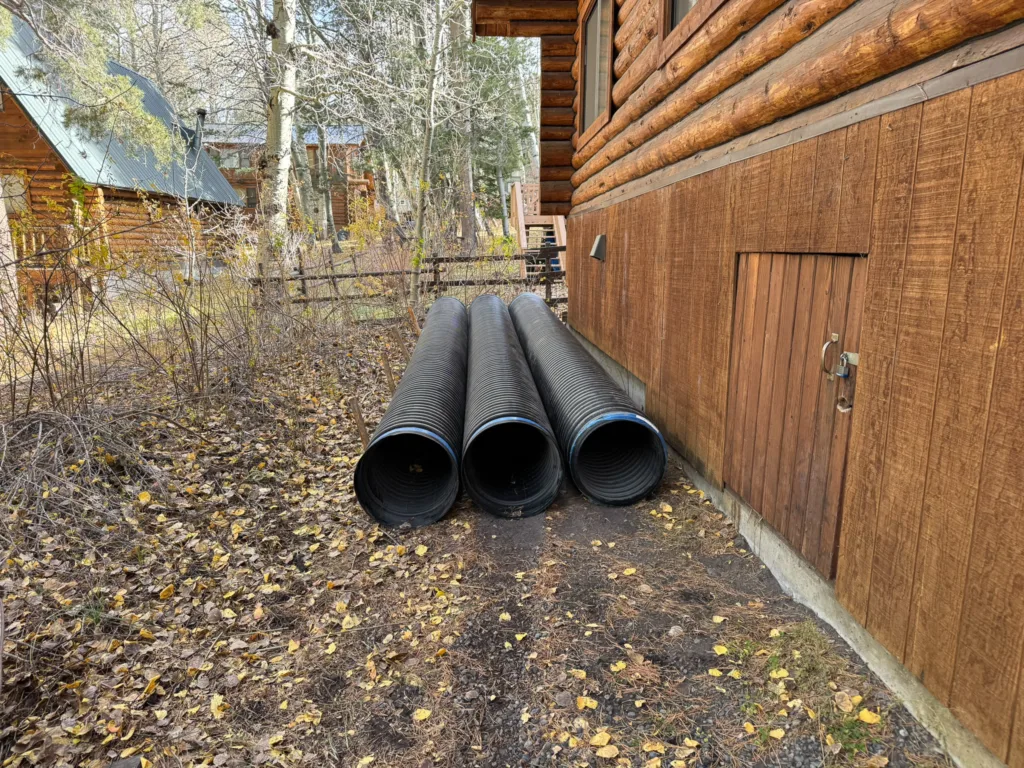
If you’re planning a new home, addition or garage in the Eastern Sierra, the right time to bring in an excavation contractor is while the plans are being finished. We can review the footing details, walk the lot and flag rock, water or access issues before they hold up the schedule.
Frequently Asked Questions
What is the frost depth in Mono County?
The Mono County Building Division lists 18 inches below exterior finished grade as the minimum frost depth for unincorporated areas. Inside the Town of Mammoth Lakes, the frost line is a minimum of 24 inches below grade. Your plans may call for deeper footings.
Do I need a soils report to build in Mono County?
The County’s design criteria require soils documentation for all structures. Ask the Building Division what form it needs to take for your project.
Does a small shed need footings below the frost line?
The California Residential Code exempts some small, free-standing accessory structures from frost protection, such as light-frame buildings up to 600 square feet with an eave height of 10 feet or less. Check with your building department before you build.
Can you pour footings on frozen ground?
No. The code says footings can’t bear on frozen soil unless the frozen condition is permanent. If the ground freezes before the pour, your engineer and concrete contractor will decide whether to thaw and protect the subgrade or wait for spring.
Plan Your Mono County Foundation Dig
Harris Excavation is a licensed General Engineering Contractor (CSLB #1117960) and a California Licensed Timber Operator (#B014361). We handle foundation excavation, grading, trenching, drainage and site prep in Mammoth Lakes, June Lake, Bridgeport, Bishop and across the Eastern Sierra.
Whether you’re breaking ground before the snow or lining up next season’s dig, send us a quote request with your address and any plans you have. We’ll get back to you with a clear written estimate.
