
Most Bay Area homeowners never look under the house until something smells musty, the floor starts to feel soft, or a plumber comes back out with muddy knees. A wet crawl space is common here, especially in older homes on clay soil, and it rarely fixes itself. Every rainy season adds more water and more chance of rot, mold and settling.
The good news is that most crawl space water comes from outside the house, which means it can usually be stopped outside the house. This guide covers where the water comes from, how to tell how bad it is, and how wet crawl space drainage actually works, from simple grading fixes to perimeter drains and sump pumps.

Where Crawl Space Water Comes From
Before anyone digs, figure out the source. Water gets under a house in a handful of ways, and each one has a different fix.
- Surface runoff. Rain lands on a yard that slopes toward the house, or a patio that drains back to the foundation. The water soaks down along the stem wall and seeps underneath.
- Roof water. An inch of rain on 1,000 square feet of roof is roughly 600 gallons. A downspout that splashes at the foundation sends much of that straight to the stem wall.
- Groundwater. On low lots and near the Bay, the water table can rise during the wet season and push water up through the crawl space soil from below.
- Clay soil. Much of the Bay Area sits on clay that holds water and drains slowly, so water that reaches the foundation lingers. Our guide to Bay Area soil types and drainage problems explains why.
- Plumbing leaks and condensation. Not every wet crawl space is a drainage problem. A dripping supply or drain line, or humid air condensing on cool surfaces, can look a lot like seepage.
A simple test: if the water shows up during or right after storms and dries out in dry weather, it’s almost always a drainage problem. If the crawl space is wet in August, call a plumber before you call us.
Signs Your Crawl Space Is Taking on Water
You don’t have to crawl under the house every week to know something is wrong. Watch for these:
- Standing water or soft spots right next to your foundation
- A musty smell inside, especially in closets and ground floor rooms
- White, chalky mineral deposits (efflorescence) on the concrete stem wall
- Damp, stained or sagging insulation between the floor joists
- Rust on nails, straps and metal connectors
- Soft, bouncy or cupping floors
- Silt lines or water stains on the foundation showing where water has pooled
After the next good rain, take a few flashlight photos through the crawl space access. Pictures taken while the water is there help a contractor see the pattern and narrow down the source.
Start Outside: Grading and Roof Water
The cheapest gallon of water to deal with is the one that never reaches the foundation. The California Residential Code requires lots to be graded so surface water drains away from foundation walls, with the ground falling at least 6 inches within the first 10 feet. Hard surfaces like patios and walkways within 10 feet of the foundation must slope at least 2 percent away from the building.
Where a property line, wall or slope makes that fall impossible, the code calls for drains or swales to carry water away from the structure. On tight Bay Area lots, that’s often the situation.
- Regrade soil and planter beds that slope back toward the house.
- Pull back mulch and soil that has built up against the siding.
- Fix patios and walkways that tip toward the foundation.
- Tie downspouts into solid buried downspout drain lines that carry roof water to a proper discharge point.
- Keep gutters clear so they don’t overflow at the eaves.
Plenty of wet crawl spaces dry out once grading and roof water are corrected. If yours doesn’t, water is coming from below or moving through the soil along the foundation, and it’s time to look at subsurface drainage.
Wet Crawl Space Drainage Options
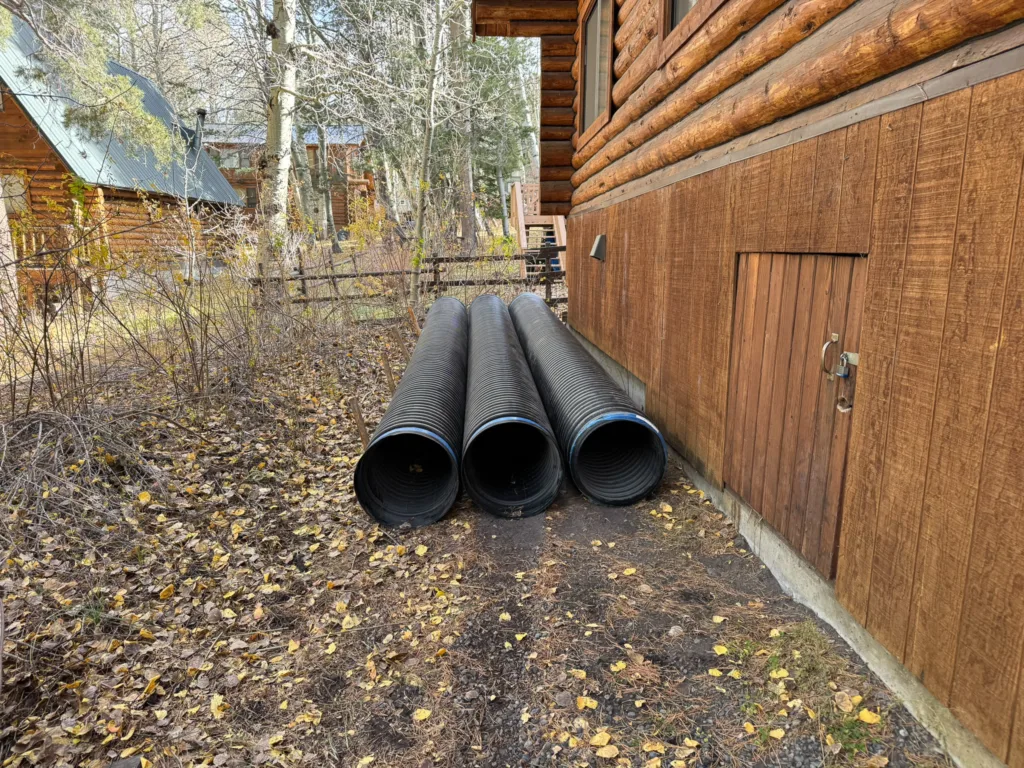
When grading alone won’t do it, the job is either to catch the water before it gets under the house, or to collect it once it’s there and get it out. Most projects use one or more of these approaches.
Exterior Perimeter Drain
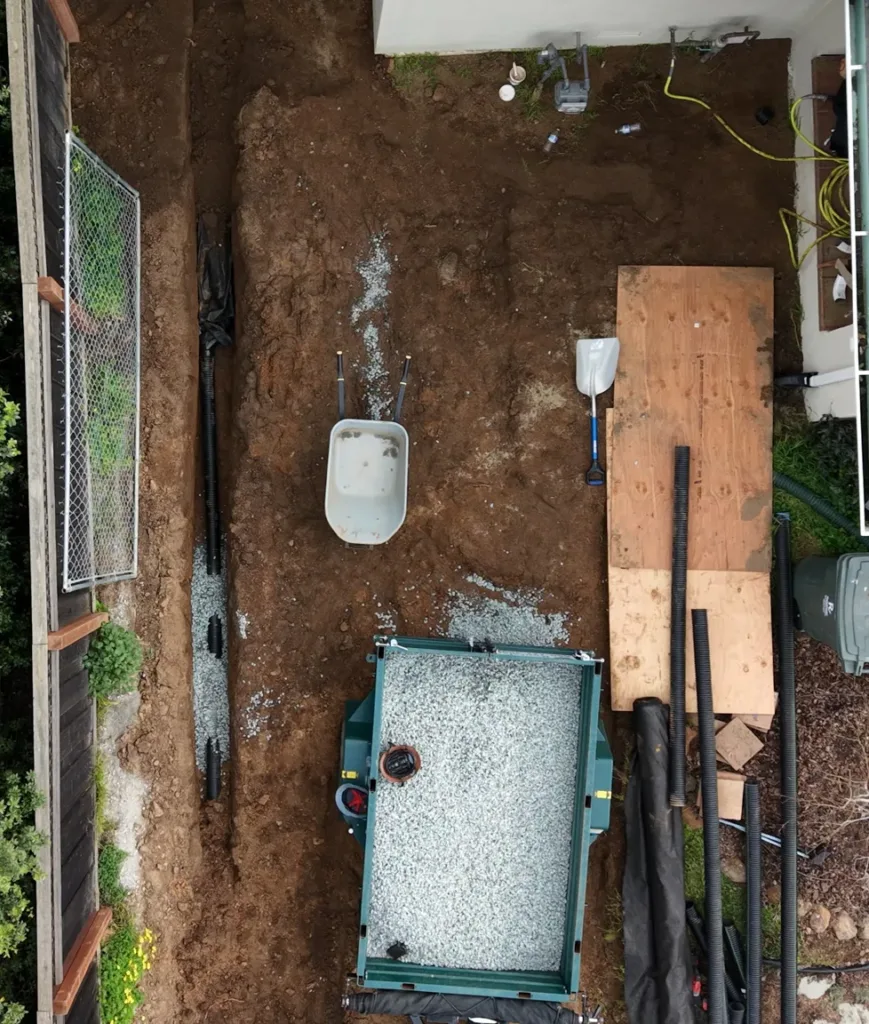
A trench along the outside of the foundation, with perforated pipe set in drain rock and wrapped in filter fabric, intercepts water moving through the soil toward the house. This is commonly called a French drain and is the most typical drainage solution for foundation water issues. The pipe has to slope to somewhere the water can go, such as a lower part of the yard, a dry well where the soil allows, or the street where local rules permit.
Interior Crawl Space Drain and Sump
When groundwater rises from below, or there’s no room outside to dig, a drain can run inside the crawl space along the low side of the foundation. It feeds a sump basin, and a pump lifts the water out to a proper discharge point. Pumps need power and occasional maintenance, so a gravity outlet is the better choice wherever the lot allows one.
Fixing the Grade Under the House
The code also speaks to the soil under the floor. Where groundwater can rise to within 6 inches of the finished floor at the building perimeter, or surface water doesn’t readily drain from the site, the grade in the under-floor space has to be as high as the outside finished grade unless an approved drainage system is provided. In plain terms, a crawl space that sits lower than the yard around it needs a real drainage plan, not just a tarp.
The code also requires vegetation and organic material to be cleared from the under-floor grade, so old wood scraps and debris should come out as part of the job.
Vapor Barriers and Ventilation: The Finishing Step
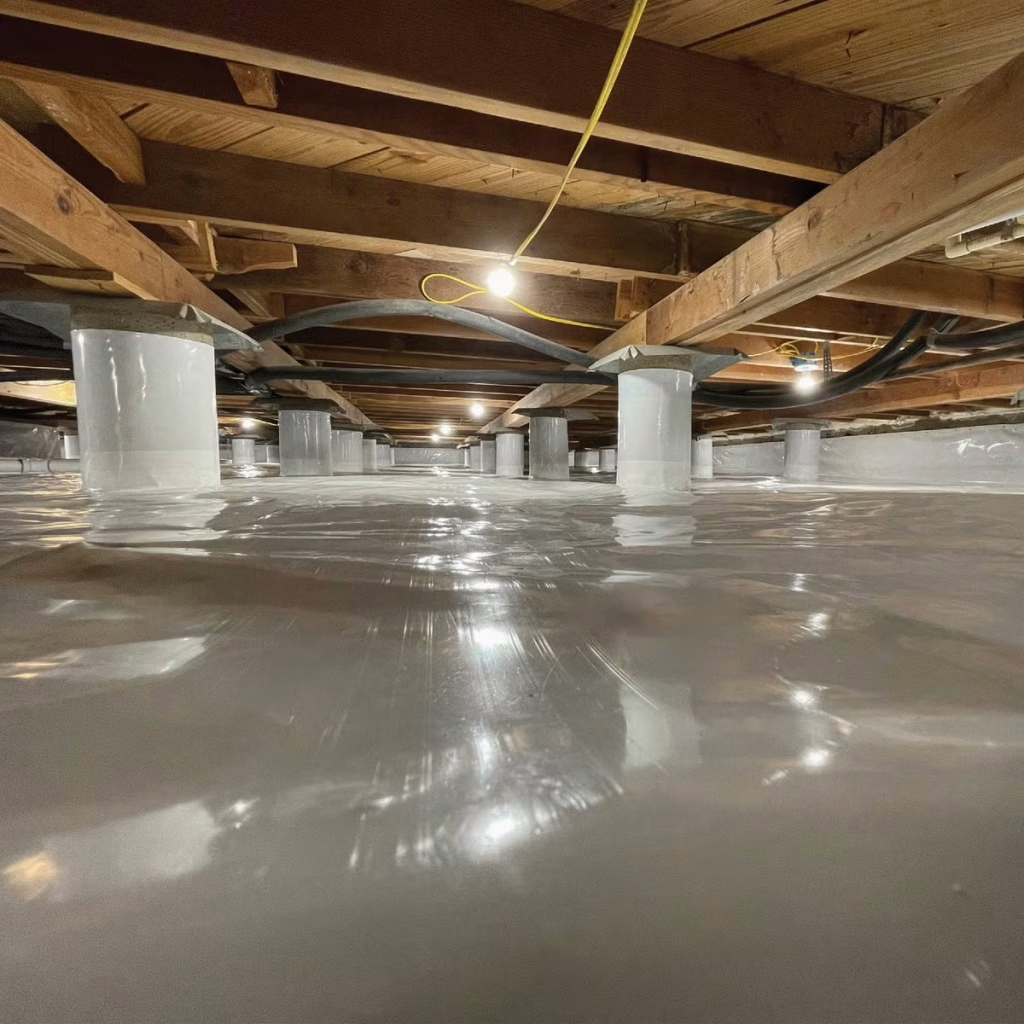
A plastic vapor barrier over the crawl space soil is a good idea, but it’s the last step, not the fix. Laid over a crawl space that floods, it traps water underneath and hides the problem until the damage shows up in the floor.
Once the water is handled, the California Residential Code gives two paths. A vented crawl space needs at least 1 square foot of vent opening for every 150 square feet of under-floor area, which can drop to 1 per 1,500 when the ground is covered with an approved Class I vapor barrier. An unvented, or sealed, crawl space needs a continuous Class I vapor retarder over the exposed earth, plus mechanical exhaust, conditioned air or dehumidification. Sealed systems tie into your heating and cooling, so talk to a qualified HVAC contractor before going that route.
When to Call a Drainage Contractor
Cleaning gutters and extending a downspout are definitely DIYable. Perimeter drains, regrading close to the foundation and drain lines that cross a yard are excavation work. They take careful trenching around existing utilities, correct pipe slope, the right rock and fabric, and a plan for where the water ends up. Done wrong, a drain can carry water toward the house instead of away from it.
It’s time to call a pro if water keeps coming back after you’ve fixed gutters and downspouts, if the crawl space floods in heavy storms, if you see cracking or settling, or if the lot is flat or slopes toward the house. Our residential drainage work covers regrading, French drains, downspout lines and perimeter drains for homes across San Mateo and Santa Clara Counties.
Frequently Asked Questions
Is a little water in the crawl space normal?
A bit of dampness after a big storm may not be an emergency, but standing water isn’t normal. Repeated wetting feeds mold and wood rot and can soften the soil the foundation bears on. Track it through a few storms and get it looked at.
Will a vapor barrier fix a wet crawl space?
No. A vapor barrier controls moisture rising off damp soil. It doesn’t stop liquid water from running in. Fix the drainage first, then install the barrier.
Do I need a sump pump?
Not always. When the water comes from surface runoff, grading and gravity drain lines often solve it without a pump. A sump is usually needed when groundwater rises under the house or there’s no downhill outlet for a gravity drain.
Do I need a permit for crawl space drainage work?
It depends on your city and the scope of work. Grading, work that changes how water flows onto a neighbor’s property, and connections to the street or storm drain are the items most likely to need review. Check with your local building department before work starts.
Get Your Crawl Space Dry Before the Next Storm
Harris Excavation is a licensed General Engineering Contractor (CSLB #1117960) based in South San Francisco. We find where the water is coming from, then grade, trench and install drainage that sends it somewhere better, for homes across San Mateo and Santa Clara Counties.
If you’ve got water under the house, send us a quote request with your address and a few photos of the crawl space. We’ll get back to you with a clear written estimate.
